




NEW

Time Tracking Software for Life Sciences Companies and CROs

Built for pharmaceutical and biotechnology companies, medical device manufacturers, contract research organizations, and diagnostic laboratories. Track project time accurately, control labor costs, and gain clear visibility into project spending.

  • Free 30-day trial
  • No credit card required
  • GDPR compliant
4.8 ( 1000+ reviews )
Time tracking software for life sciences companies and CROs

Trusted by life sciences organizations worldwide

  • T-Therapeutics
  • Cerba Research
  • Abbott
  • Constructive Bio
  • Worldwide Clinical Trials

Where life sciences projects lose
time and budget control

Time capture

Late time entries lead to inaccurate project data

Project teams often split their day across several programs, but by the end of the week, those hours have to be reconstructed instead of recorded. Hours are harder to allocate correctly, making project reports and labor costs less reliable.
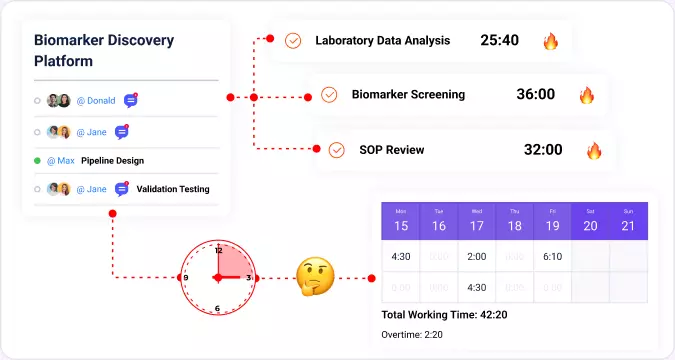
Late time entries lead to inaccurate project data
Time attribution

Project time is difficult to attribute accurately

Research, validation, documentation, meetings, and other shared work often support more than one program. Without a simple way to track time as work happens, it's difficult to assign time consistently across projects.

Project time is difficult to attribute accurately
Budget visibility

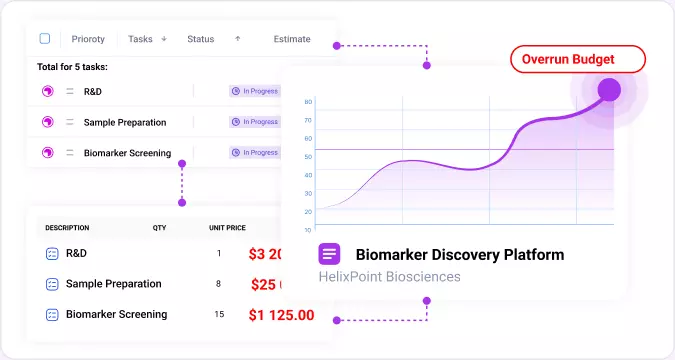
Budget overruns are spotted too late

R&D and product development programs often run for months or years, but labor costs are reviewed only at scheduled milestones. By the time a budget overrun is identified, it may already be too late to bring spending back under control.

Budget overruns are spotted too late
Estimate accuracy

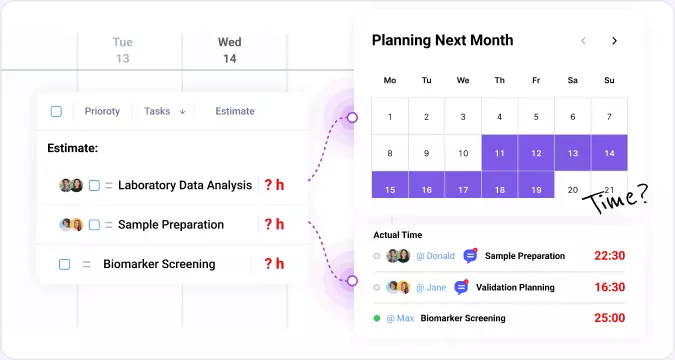
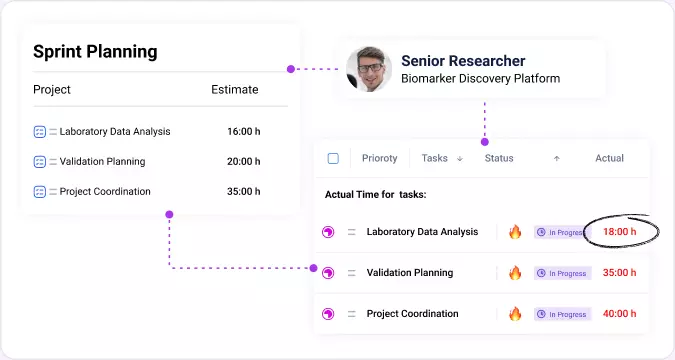
Project estimates aren't based on actual work

Without comparing estimated and actual hours, it's difficult to understand where projects consistently exceed or fall below expectations. The same inaccurate estimates are used again, making future planning less reliable.

Project estimates aren't based on actual work

Different roles, different ways
to use time data

From tracking time on individual projects to reviewing labor costs across multiple projects, each role sees the information they need to do their job.

Project Manager

Project Manager

Tracks progress and spending across assigned projects, pulling together time and cost data from every team involved.

Finance Manager

Finance Manager

Reviews program and department costs against budget to keep R&D spending on track across multiple projects.

R&D Team Lead

R&D Team Lead

Reviews how the team spends time across active projects and tasks, spotting where additional support is needed before work falls behind.

Researcher

Researcher

Logs hours against the right project and task from a browser or mobile device, making time tracking part of the normal workflow.

Try all features free for 30 days

No credit card required Unlimited users Human support & onboarding

Time tracking features life sciences
companies and CROs need

Capture project time as work happens

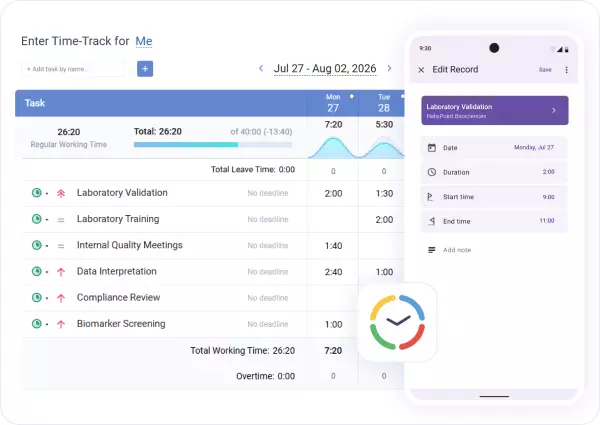
Researchers and project staff log hours from a browser or mobile device, assigning every entry to the right project as they work.

Weekly timesheets help keep project records complete and accurate without relying on memory at the end of the week.

Capture project time as work happens

Organize time by project and activity

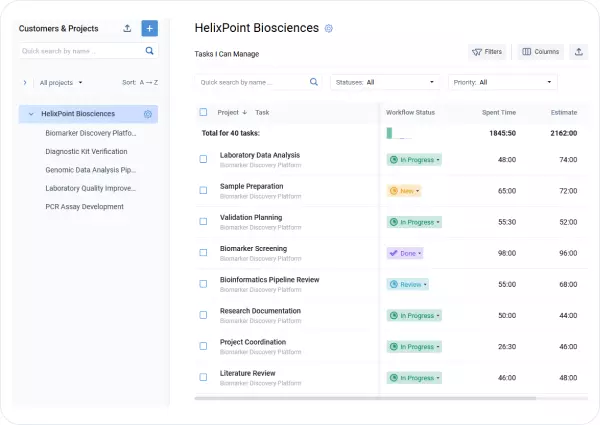
Assign every hour to the right project and task, even when work supports multiple programs.

Flexible project structures make it easier to record shared work consistently, keeping project records, reports, and labor costs accurate across teams.

Organize time by project and activity

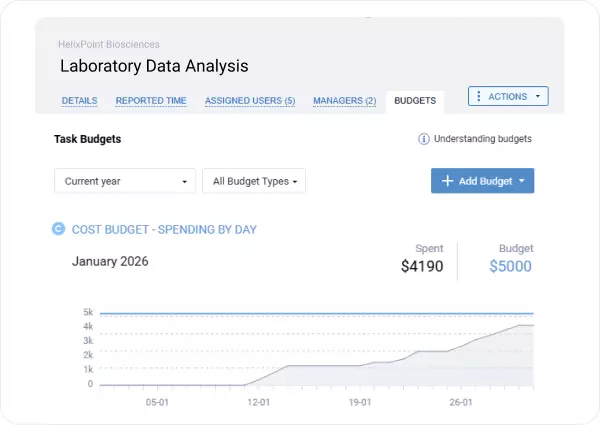
Monitor project budgets in real time

Set time or labor cost budgets for each project and monitor progress as hours are logged.

Real-time visibility helps identify potential overruns early, giving managers time to adjust scope, staffing, or priorities before budgets get out of control.

Monitor project budgets in real time

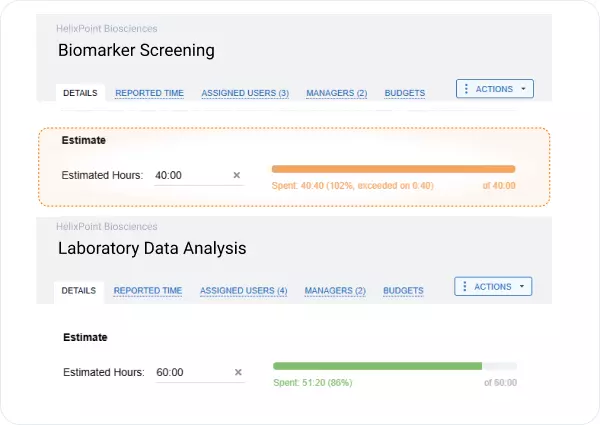
Base future estimates on actual work

Compare estimated and actual hours for every project to identify recurring gaps between plans and actual work.

Historical time data helps teams create more accurate estimates and improve planning for similar projects.

Base future estimates on actual work

Time tracking reports
for life sciences teams

Built for pharmaceutical companies, biotechnology firms, medical device manufacturers, contract research organizations, and diagnostic laboratories, these reports help monitor project progress, labor costs, and budget performance. Compare planned and actual hours, identify budget risks early, and make better resourcing decisions based on accurate project data.

Time-track report

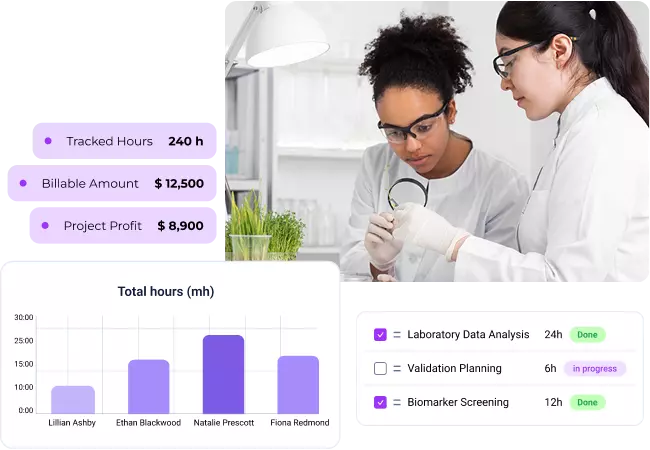
Work time for any period, grouped by program, project, department, or person. Understand how time is allocated across your entire project portfolio.

Time-track report

Staff performance report

See how researchers and project teams spend their time across programs and projects to balance workloads, improve planning, and allocate resources more effectively.

Staff performance report

Cost of work report

Hours and associated costs per person, combined with pay rates. Understand the true labor cost across every team contributing to a project.

Cost of work report

Estimated vs actual time report

Variance between planned and actual hours for any project or program. Compare planned and actual hours for every project to identify recurring gaps and improve future estimates.

Estimated vs actual time report

Calculate the value
of untracked hours

($)

Your organization could recover up to

$ 405 600

in annual labor value with accurate time tracking.

* Default value assumes up to 10% of weekly work hours may go unrecorded or be logged against the wrong program or project when timesheets are completed from memory rather than in real time. Adjust the value to match your organization's experience.

Ready to take control of project time, labor costs, and budgets?

30-day free trial No credit card Human support & onboarding

What life sciences teams
say about actiTIME

Working within the first week

We expected it to take a while to get everyone logging time consistently, but most people were comfortable with actiTIME within the first week. The mobile app helped, since a good chunk of our staff isn't at a desk all day.

Already broken down by department

Before this we spent time pulling numbers together every month just to understand what each program had actually cost. Now, with actiTIME, the reports are already broken down, so we can get straight to the numbers.

Caught it early

One of our programs was running over its planned hours, and we caught it a few weeks before the quarterly review. That gave us time to adjust instead of discovering it when the review meeting came around.

Just checking numbers

We used to spend a day or two reconciling timesheets against each study budget before we could invoice. Now the hours are already tied to the right study, so it's mostly just checking the numbers.

Frequently asked questions

  • actiTIME is a good fit for pharmaceutical, biotechnology, and medical device companies, as well as contract research organizations (CROs), diagnostic and testing laboratories, and other companies across the life sciences industry. It helps track project time, monitor labor costs, and manage budgets, whether you manage a single lab or multiple research sites.

  • Yes. actiTIME includes features that support work in regulated life sciences environments, such as role-based permissions and approval workflows. It supports project time tracking, labor cost management, and budget visibility, but isn't intended to replace quality management systems or other software used for regulatory compliance.

  • Yes. actiTIME lets you track billable time, assign billing rates, and generate invoices directly from approved timesheets. This makes it easier to bill clients or sponsors accurately while keeping project time and billing records in one place.

  • actiTIME complements your LIMS or electronic lab notebook (ELN) by tracking project time, labor costs, and budgets. It doesn't manage lab data, samples, or experimental results, so the two systems complement each other rather than replacing one another.

  • Yes. Teams can be organized by lab, site, department, or business unit within the same actiTIME account. Managers can view data for individual teams or get a consolidated view across the entire organization, making it easier to monitor project time, labor costs, and budgets while maintaining visibility into each team and location.

  • actiTIME helps protect access to your data with role-based permissions, two-factor authentication, and configurable password and account lockout policies. Cloud accounts include daily backups, while organizations that need greater control over data location and infrastructure can use the self-hosted version.

  • Yes. actiTIME integrates with QuickBooks Online for invoicing, connects with more than 2,000 applications through Zapier, and provides an open API for custom integrations, data exchange, and automation. This makes it easy to connect actiTIME with your existing business and operational systems.

Keep every research program on time and on budget

Start your 30-day free trial or book a demo to see how actiTIME helps you track project time, understand labor costs, and make informed decisions about staffing, budgets, and project priorities.

30-day free trial No credit card required 100% human support