

Most of us are familiar with the classic “triple constraint” model, which emphasizes the delicate balance between scope, time, and cost. However, in today’s ever-changing environment, it’s essential to broaden our understanding of constraints. We must consider a wider array of limitations that can impact project success.
To gain deeper insights into managing project resources effectively, we reached out to Mike Clayton, a renowned project management expert and author. With over 30 years of experience in consulting, project management, training, writing, and speaking, and a career that’s as diverse as it is impressive, Mike has carved out a name for himself in the realms of professional development and personal growth.
He offers a range of online, self-paced project management courses designed to fit seamlessly into the hectic schedules of today’s workforce and provides personalized coaching and mentoring sessions to select clients, sharing his wealth of knowledge directly.
As a prolific content creator, Mike runs two YouTube channels—one focused on project management education and the other on enhancing personal effectiveness. He is also the author of 14 insightful books, including titles such as “How to Manage a Great Project,” “How to Manage Your Time,” and “How to Speak so People Listen.”
A Deep Dive Into Project Resource Constraints
Most guides and tips lists on the topic start with a familiar narrative: attempting to cover an expansive scope on a shoestring budget. However, we know that the challenges associated with resource management run much deeper than surface-level issues. They encompass a myriad of complexities that can derail even the most well-planned initiatives.
Resource constraints refer to all limitations or risks associated with the resources available for a project, and they affect every stage of the project lifecycle. For instance, they may encompass not only budgetary limitations but also availability of skilled personnel, access to technology, or even the quality of materials used. Effectively managing these factors is vital—not just for navigating challenges but also for proactive planning and forecasting.
Consider a construction project that is not limited in finances but still faces resource constraints due to a shortage of skilled labor, leading to increased costs and extended timelines. Or think of a software development project where even the most skilled team members are unable to provide the desired quality due to limited communication with the stakeholders. All of these are stories about limited resources.
To delve into these intricacies, we created question touching upon such topics as predicting and scheduling the necessary resources, navigating competition for those resources, making critical measurements and applying all kinds of automation techniques. Additionally, we probed into some of the most common constraints Mike has encountered throughout his extensive career.
So, get ready to dive in!


7 Important Questions About Resource Constraints in Project Management
Identifying resource requirements for a large project
Embarking on a large project is akin to setting sail on a vast ocean; without a well-charted course, you risk drifting aimlessly. Identifying resource requirements is the compass that guides you through the complexities of manpower, materials, and finances. It’s not merely about gathering what you need; it’s about orchestrating a harmonious flow from initiation to completion. So, how do you effectively pinpoint these essential resources?
Mike Clayton: “Understand the project. Think about the skills you need. Then look at the work required to estimate time commitments. Finally, look at scheduling to balance the loads on resources. Always remember that resources include people, assets, equipment, and materials.”
Prioritizing wisely when multiple teams are competing for the same resources
In small companies, competing teams often find themselves in a tug-of-war for limited resources. This scenario can quickly spiral into chaos without a clear prioritization strategy, leading to stalled projects and missed deadlines. Establishing a fair and strategic allocation framework not only ensures that critical projects receive the attention they deserve but also fosters a collaborative environment. So, what’s the best approach to navigate this challenging landscape?
Mike Clayton: “This is a role for portfolio management. You need to understand the strategic value of each project and its time constraints. Always aim for individuals or coherent teams to mono-task, rather than try to spread their work over different projects or workstreams at the same time. Mono-tasking is far more efficient than multi-tasking.”
Strategies to manage resource constraints and avoid bottlenecks during project execution
Picture yourself in a busy kitchen, where the timing of each dish is crucial to delivering a flawless meal…. Just as running out of an ingredient or overloading the oven can lead to culinary chaos, resource constraints in project execution can create significant delays and complications. What strategies can you implement to keep your projects running smoothly?
Mike Clayton: “Schedule constraints first. Always think in terms of the critical chain – what is the sequence of activities on which everything else (task and schedule driven) depends?”
Tools or methodologies for tracking resource utilization and availability
Just like a conductor ensures each instrument plays its part in harmony, effective tracking of resources helps maintain order and efficiency throughout the project lifecycle. With various tools and methodologies available, how can you select the right ones to ensure optimal resource management and prevent last-minute scrambles?
Mike Clayton: “I am tool agnostic and do not have specific recommendations.”
Check out this post to explore different project management systems and methodologies yourself and pick the right one for your team.
Metrics to evaluate the effectiveness of resource management in a large project
Resource management metrics serve as the vital signs of your project’s health, providing insights into how effectively resources are being managed. They allow managers to assess performance and make informed decisions, but which of them truly reflect the effectiveness of resource management in large projects?
Mike Clayton: “The only metric that counts is value delivery: cost and benefit combine to give ROI (=net benefit/cost).”
The most common schedule constraints
Every project manager knows that time is often the most elusive resource of all. Schedule constraints can emerge from various sources—be it external dependencies, unexpected delays, or internal misalignments—and can significantly impact project outcomes. What are some of the most frequent schedule challenges you’ve encountered in your experience?
Mike Clayton: “This will depend on the context of the project. It might, for example, be 1. Time of year/weather conditions for a civil engineering project; 2. Business cycle for an organizational project—linking to sales cycles, business planning, or statutory reporting; 3. Funding rounds for entrepreneurial projects.”
Importance of process automation
We all dream about a virtual assistant that tirelessly manages routine tasks, freeing us to focus on strategic initiatives and creative problem-solving. But in reality, what specific value does automation bring to this field?
Mike Clayton: “I see process automation as an important part of the development of all areas of business: operations and project-based working. We’ll increasingly see tools that will automate more and more capabilities. I think in project-based working, these will start with things like 1. Data gathering, analysis, and reporting; 2. Project scheduling and budgeting; 3. Resource estimation, allocation, and scheduling.”
Summary: A 7-Step Strategy to Manage Project Resource Constraints
Based on Mike’s tips, we’ve made a strategic seven-step plan to ensure you have the right resources at the right time, while minimizing conflicts and maximizing efficiency:
Step 1: Before diving into resource allocation, thoroughly analyze the project to determine the specific skills, materials, and financial resources needed. Engage with stakeholders to gather insights about the scope and objectives.
Step 2: Break down the work into manageable tasks. Estimate the time commitments required for each task to ensure that you have a realistic view of what’s truly critical.
Step 3: Establish a clear prioritization framework: utilize portfolio management principles to assess the strategic value of each project and its urgency.
Step 4: Identify the critical path of activities that are essential for project completion and put them on the first place.
Step 5: Select appropriate tools and methodologies for tracking resource utilization and availability. While Mike remains tool agnostic, it’s may be helpful to choose systems that fit your team’s workflow and communication style. Consider exploring various project management systems to find one that enhances transparency and coordination among team members.
Step 6: Establish metrics to evaluate the effectiveness of your resource management strategies throughout the project lifecycle. Focus on metrics that reflect value delivery, such as return on investment (ROI).
Step 7: Be aware of common schedule constraints that may arise during project execution, such as external dependencies or unexpected delays. Proactively plan for these challenges by building in buffer time or alternative strategies to mitigate their impact on your project timeline.
Allocate Project Resources Effectively with actiTIME
To enhance your resource management capabilities, consider integrating actiTIME into your project workflow. actiTIME is a robust time tracking and project management tool that allows teams to allocate resouces and monitor how they are spent in real-time. It also offers an array of features to streamline resource management and ensure that the planned work is completed on time and within budget.
You can assign tasks to team members, track their progress, and analyze workload distribution, which helps identify potential resource conflicts early on, allowing for timely adjustments and reallocation of resources as needed.
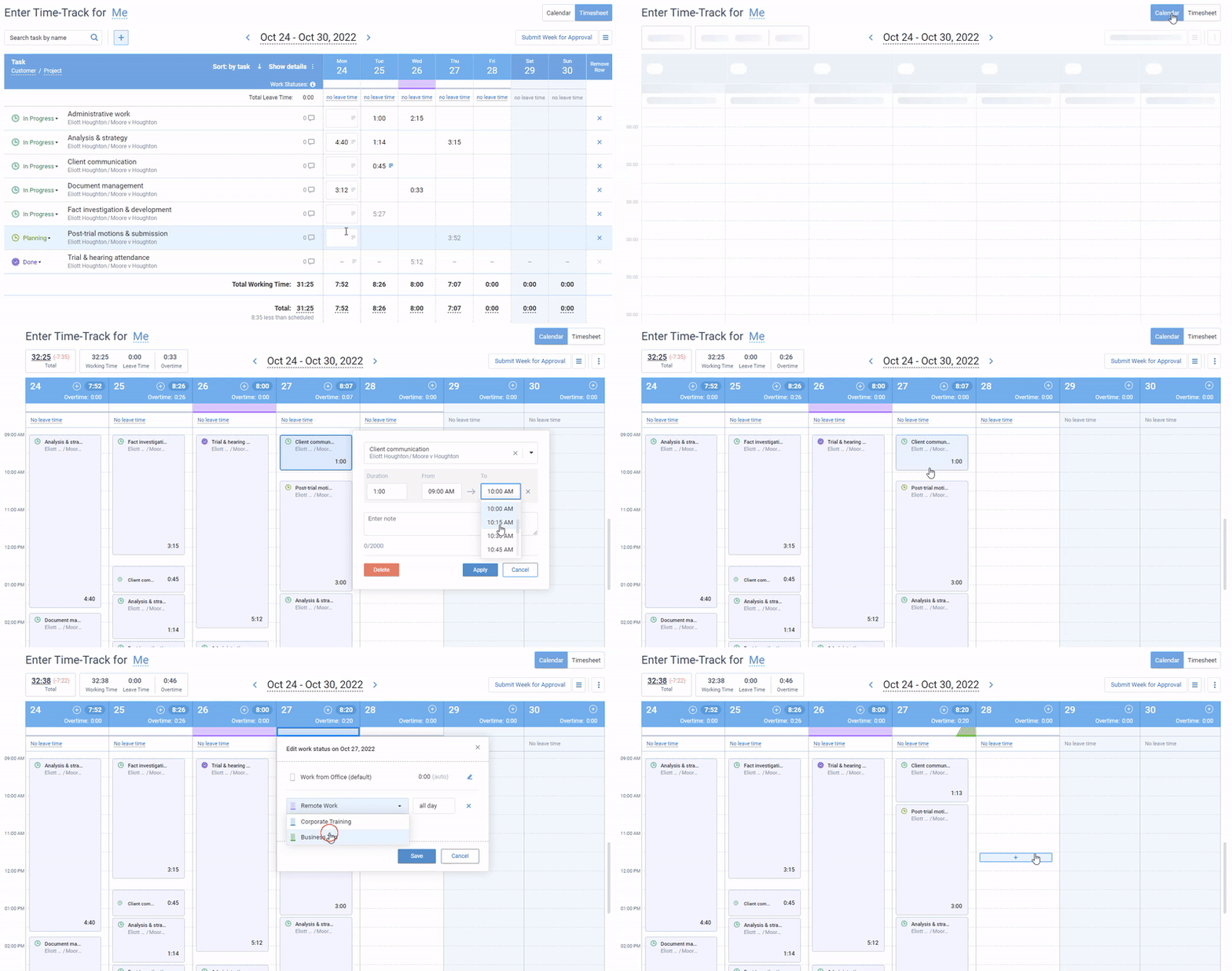
Here’s what else actiTIME has to offer:
- Time tracking. Knowing exactly where your team’s time is being spent can make a world of difference in project management. With actiTIME, you can easily log hours, making it simple to identify roadblocks or tasks that are taking longer than expected.
- Task estimates. Set realistic expectations from the get-go. By assigning estimated times for each task, it becomes easier to allocate resources effectively.
- Cost and budget tracking. actiTIME allows you to monitor project expenses, compare them against your budget and estimates, and make informed financial decisions in real time.
- In-depth performance reports. These insights allow you to measure productivity, identify high-performers, and pinpoint areas that need improvement.
- Staff absence tracking. Using actiTIME, employees can log days off directly in their timesheets. To access more advanced absence management functionality (with automation and comprehensive time off reports), you can integrate it with actiPLANS, a flexible resource scheduling solution.
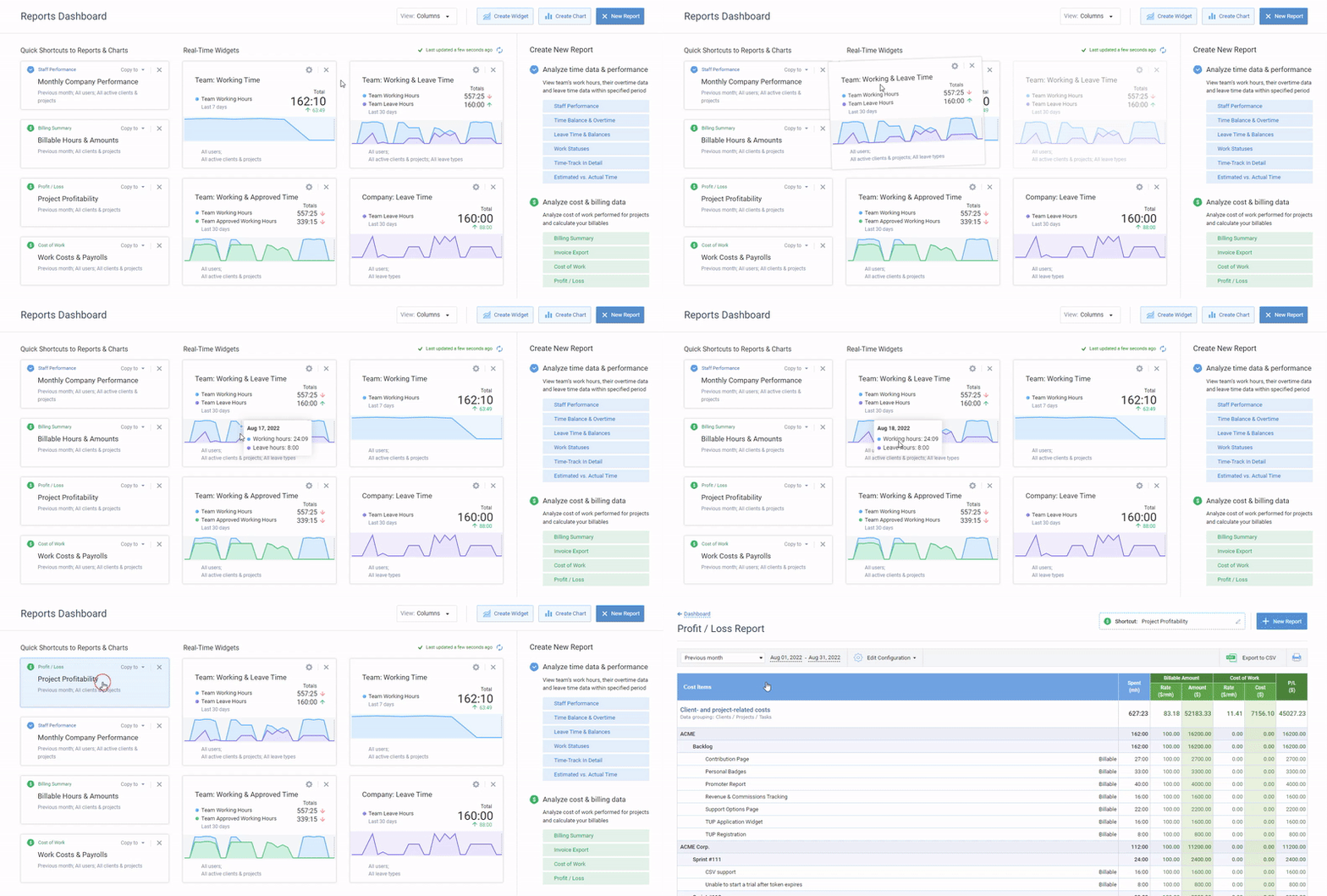
In a nutshell, actiTIME equips you with the tools you need to manage your resources efficiently and keep your projects on the right track.
Check it out in action during a free 30-day trial.

In addition to the software product, actiTIME offers a series of trainings and certifications, including the agile project management training and an immersive PMBOK Guide-based simulation. These programs are designed to help you evaluate your current skills and identify any knowledge gaps. By participating in these trainings, you can enhance your project management abilities and improve your overall effectiveness in managing resources.