Every bookkeeping program for small businesses records sales and expenses, puts each one in a category and checks the totals against the bank statement. The real difference between them is who does that work. In some you type and match everything yourself, in others a bank feed and a few rules handle most of it while you review, and with bookkeeping services a person does the job and the software is where you read the result.
That one question sets your monthly cost and your monthly workload, so this guide sorts 10 bookkeeping programs for small business owners by it, from simple bookkeeping software you run yourself to a bookkeeping app that pays your tax for you. You will find free desktop books, apps for sole traders in the UK, the US, Australia and New Zealand, a receipt capture tool and two bookkeeping services with their own software. Prices come from each vendor’s own pricing page.
What a bookkeeping program does
A bookkeeping program is software that records a business’s transactions, assigns each one to an account category, and reconciles those records with bank and card statements. Its output is a clean ledger plus a profit and loss report that an owner, an accountant or a tax authority can rely on.
Accounting software does all of that and adds payroll, inventory, multi entity consolidation, budgets and year end adjustments. A sole trader or a firm of five people often pays for that layer and never opens it. If you do need the full suite, our guide to small business accounting software compares QuickBooks Online, Xero, Zoho Books, Sage 50 and others on their real year one cost, and our list of free accounting software for small businesses covers open source options such as GnuCash and Akaunting. This page stays with the daily bookkeeping job.
In practice, bookkeeping for a small business comes down to five recurring tasks:
- Getting transactions in, either by a live bank feed or by importing a statement file
- Categorizing each transaction against a chart of accounts
- Attaching the receipt or invoice that proves it
- Reconciling the ledger balance with the bank balance each month
- Handing figures to an accountant or filing them with the tax authority
Bookkeeping programs compared
The first table shows who does the recording and whether you can start without paying. The second shows which country each tool is built for, since a UK sole trader and a US LLC face different filing rules.
| Tool | Who records and reconciles | Free option |
|---|---|---|
| actiTIME | Not a bookkeeping program: records billable hours and produces invoices that feed the books | Yes, free version for up to 3 users |
| Manager | You, with imported bank statements | Yes, desktop edition with no time or usage limits |
| Odoo Accounting | Bank sync and matching rules, you review | Yes, one app free with unlimited users |
| FreeAgent | Bank feed and categories, you review | Yes, with a qualifying NatWest, RBS, Ulster Bank or Mettle account |
| Coconut | Bank feed and categories, you review | Free for 2 years with a Zempler account, otherwise 14 day trial |
| Hnry | Hnry’s accountants, from income paid into a Hnry account | No, fee taken from income |
| Found | Automatic from the Found business account, you review | Yes, core account and bookkeeping tools |
| Dext | Extracts receipt data and publishes it to your accounting program | No, free trial only |
| Bench | A dedicated human bookkeeper | No |
| Pilot | AI with bookkeeper review, a dedicated bookkeeper on higher tiers | No, free trial available |
| Tool | Built for | Tax output |
|---|---|---|
| actiTIME | Teams in any country that bill by the hour | None: billing summaries and PDF invoices |
| Manager | Any country, single user on the desktop edition | Financial reports; tax filing not published |
| Odoo Accounting | Any country, with local charts of accounts and taxes | Country specific tax reports |
| FreeAgent | UK sole traders, partnerships and limited companies | MTD for VAT and MTD for Income Tax |
| Coconut | UK sole traders and landlords | MTD for Income Tax quarterly updates, Self Assessment |
| Hnry | Sole traders in the UK, Australia and New Zealand | Tax paid as you earn, returns filed for you |
| Found | US self employed people and small companies | Schedule C and 1120 or 1120S forms generated |
| Dext | Any country, alongside QuickBooks, Xero, Sage and others | None directly |
| Bench | US small businesses | Year end tax ready financials; filing on tax tiers |
| Pilot | US startups and small businesses | Year end package for your preparer; filing sold separately |
How much time a bank feed saves
The main reason to pay for a bookkeeping program when free ones exist is time. The example below is illustrative, built for a sole trader with 120 business transactions a month who takes about 1.5 minutes to enter and categorize each one by hand from a statement.
The result is sensitive to how well the rules fit your business. If they only catch half of your transactions, 60 remain at 1.5 minutes each, so the monthly total becomes 90 + 15 = 105 minutes and the saving falls to 75 minutes a month, about 15 hours a year. Shops with many small, repeat suppliers usually sit at the high end; consultants with irregular expenses sit lower.
The same arithmetic works for services that charge a percentage. Hnry in the UK charges 1% plus VAT of income paid into its account, capped at £600 plus VAT a year, so the cap is reached at £600 / 1% = £60,000 of income. FreeAgent’s sole trader subscription at its regular annual rate is £190 a year, so a percentage fee costs less than that subscription only while income stays under £190 / 1% = £19,000 a year. Above that point the extra money buys Hnry’s filing and accountant service rather than better bookkeeping.
10 bookkeeping programs and apps for small businesses
1. actiTIME
- Billable hours
- PDF invoices
- QuickBooks export
Pricing: free version for up to 3 users; paid version from $5 per user per month; 30 day free trial with all features.
Best for: consultancies, agencies, engineering and accounting firms whose revenue is hours billed to clients.
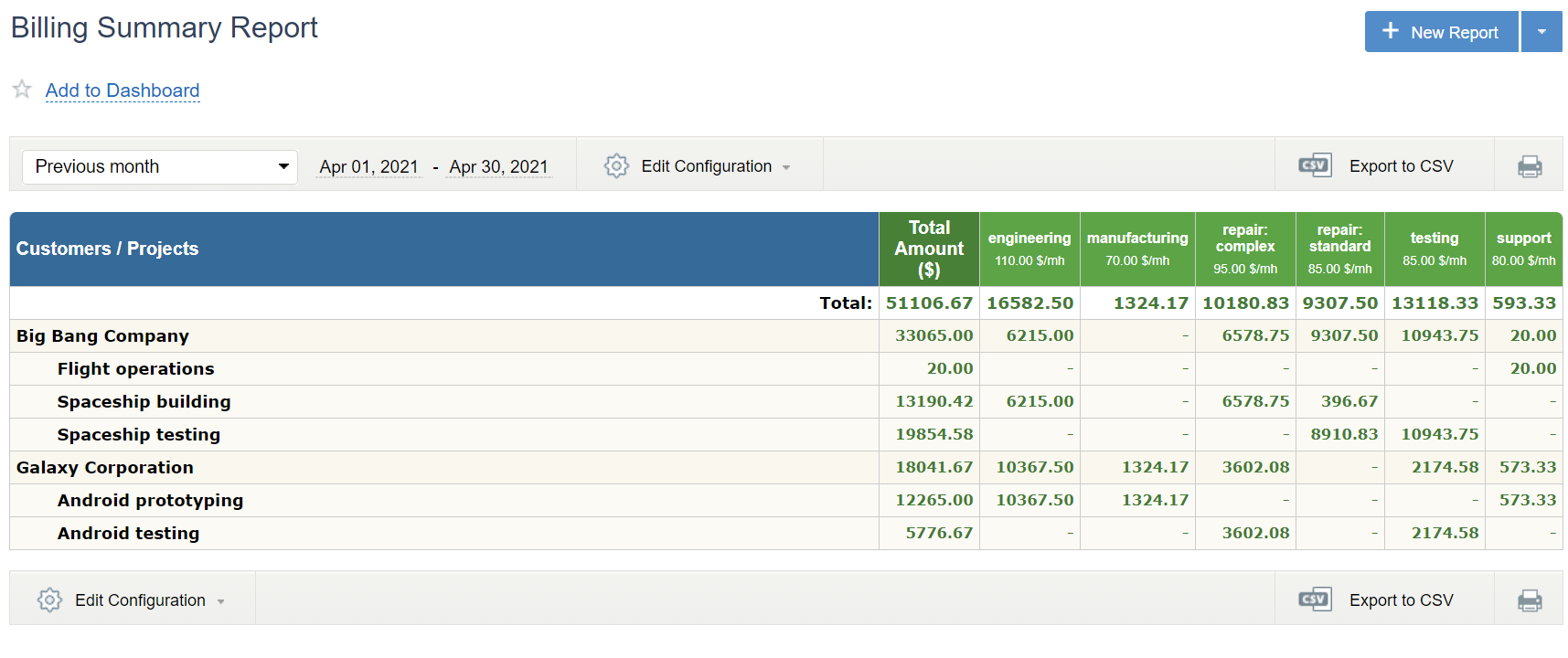
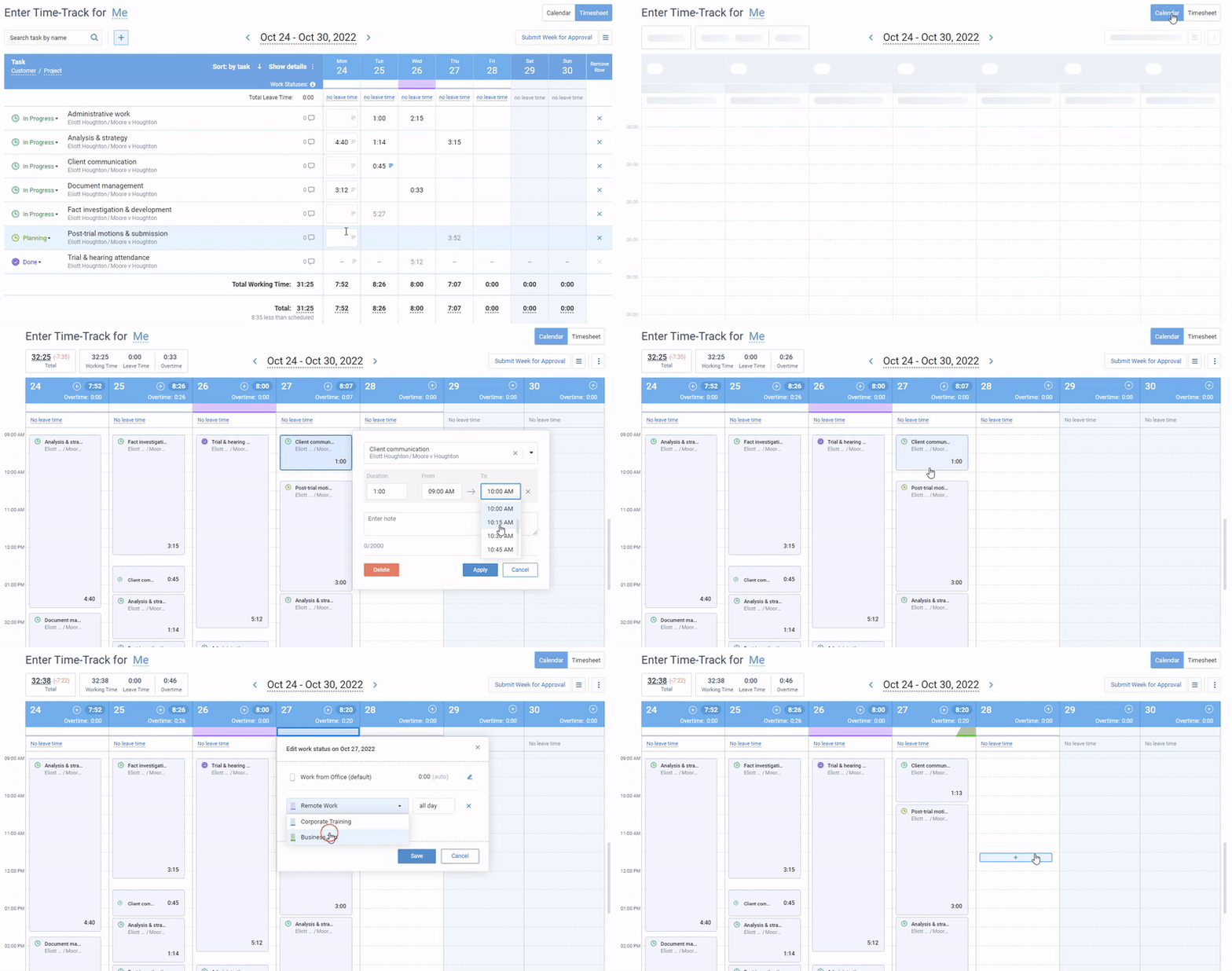
actiTIME is not a bookkeeping program. It has no bank feed, no ledger and no reconciliation, and it files nothing with a tax authority. It sits one step before your books: it records the hours your team works on each customer, project and task, then turns them into the revenue lines your bookkeeper later reconciles. People log time in a weekly timesheet, a calendar view, the mobile app or a Chrome extension. Each project bills either by type of work rates or by individual user rates with effective dates, and the Billing Summary Report and PDF invoices follow that choice. Cost of work rates for each person feed the Cost of Work and Profit/Loss reports. For teams that keep their books in QuickBooks, the QuickBooks integrator pushes timesheet data across so nobody retypes it. The limitation is the flip side of the focus: you still need one of the programs below to record expenses and reconcile the bank, and the QuickBooks integrator is not part of the free version.

Time tracking became a breeze
With actiTIME’s mobile app, tracking time on the client’s side became a breeze. Now accountants simply switch on the timer on their phone as they start another task and get accurate time logs without taking notes.
2. Manager
- Free desktop books
- Windows, Mac, Linux
- Statement import
Pricing: desktop edition free; Cloud Edition price is not published on the vendor’s pricing page.
Best for: one person keeping the books for one or several small businesses who wants the data on their own computer.
Manager is free with no trial clock attached. The desktop edition runs on Windows, Mac and Linux with, in the vendor’s words, no time limits and no usage limits, and it needs no internet connection. You import bank statements, then reconcile bank accounts, record receipts and payments, and issue invoices from the same file. Modules switch on as you need them, so a shop can enable inventory while a consultant enables billable time. One installation can hold several businesses, which suits a bookkeeper running books for family firms. The trade off is that the desktop edition is single user: Manager’s own comparison page says it does not support multi user access, so an accountant cannot log in alongside you. On the desktop edition transactions come in through bank statement import, which makes it a weekly or monthly chore, and backups are your job. If you move up to the Cloud Edition later, Manager states you can download your data and keep using the desktop edition for free.
3. Odoo Accounting
- Bank sync
- Auto matching
- Local tax setup
Pricing: One App Free plan covers one app with unlimited users; Standard costs US$31.10 per user per month billed annually or US$38.90 monthly.
Best for: small teams outside the US and UK who want automated bank matching for free and may add sales or inventory apps later.
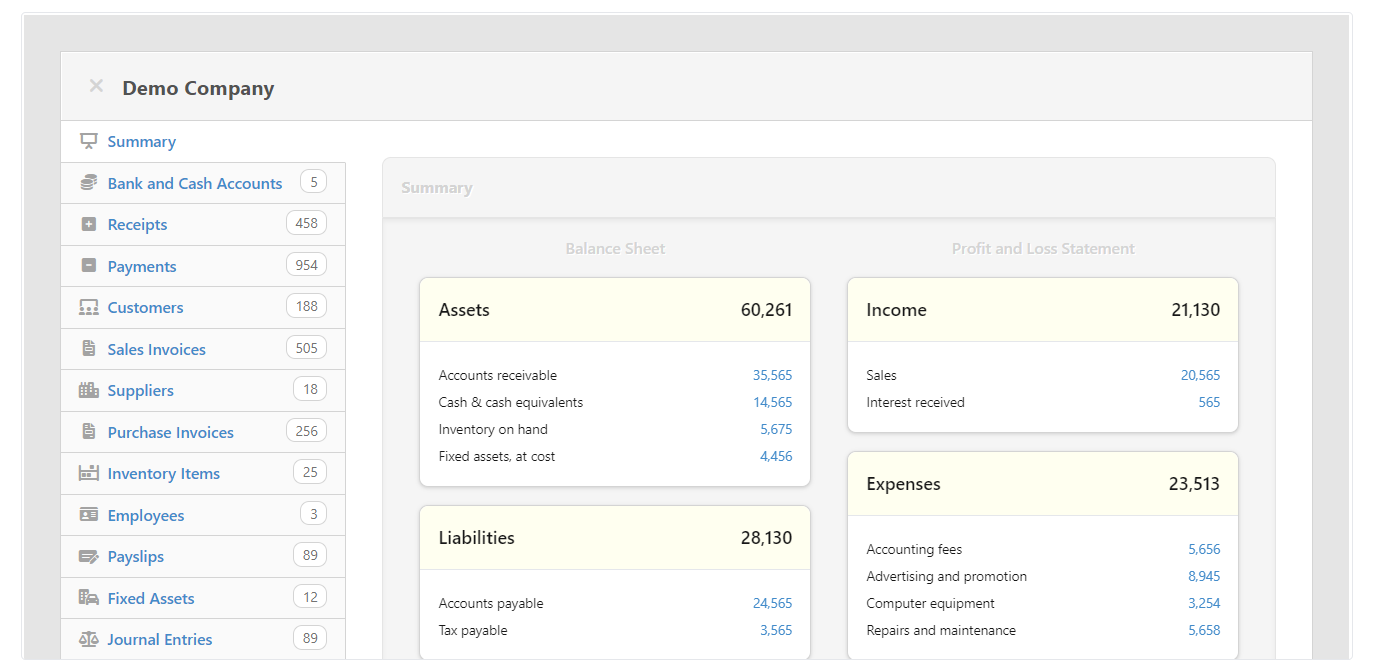
Odoo Accounting is free when it is the only Odoo app you run, and the free plan has no user cap, which nobody else in this list offers. Odoo says it connects to more than 28,000 banks and that its reconciliation matches 95% of transactions automatically. Expense photos and supplier bills go through AI data capture that Odoo puts at a 98% recognition rate, after which you validate the entry. Localization is why it is on this list: Odoo ships country charts of accounts, tax rates and country specific reports, so a small firm in a market that the US and UK apps ignore still gets a ledger shaped for its tax office. The free plan covers one app, so adding a second one such as inventory means moving to paid per user pricing. In practice the screens assume you know what a journal entry is, and a first time owner will probably want an accountant to set it up.
4. FreeAgent
- MTD for VAT
- MTD for Income Tax
- Bank feeds
Pricing: sole trader £19 a month or £190 a year, partnership or LLP £27 a month, limited company £33 a month, each with 50% off the first six months or first year; free with a qualifying bank account.
Best for: UK sole traders, partnerships and limited companies, especially NatWest group or Mettle customers.
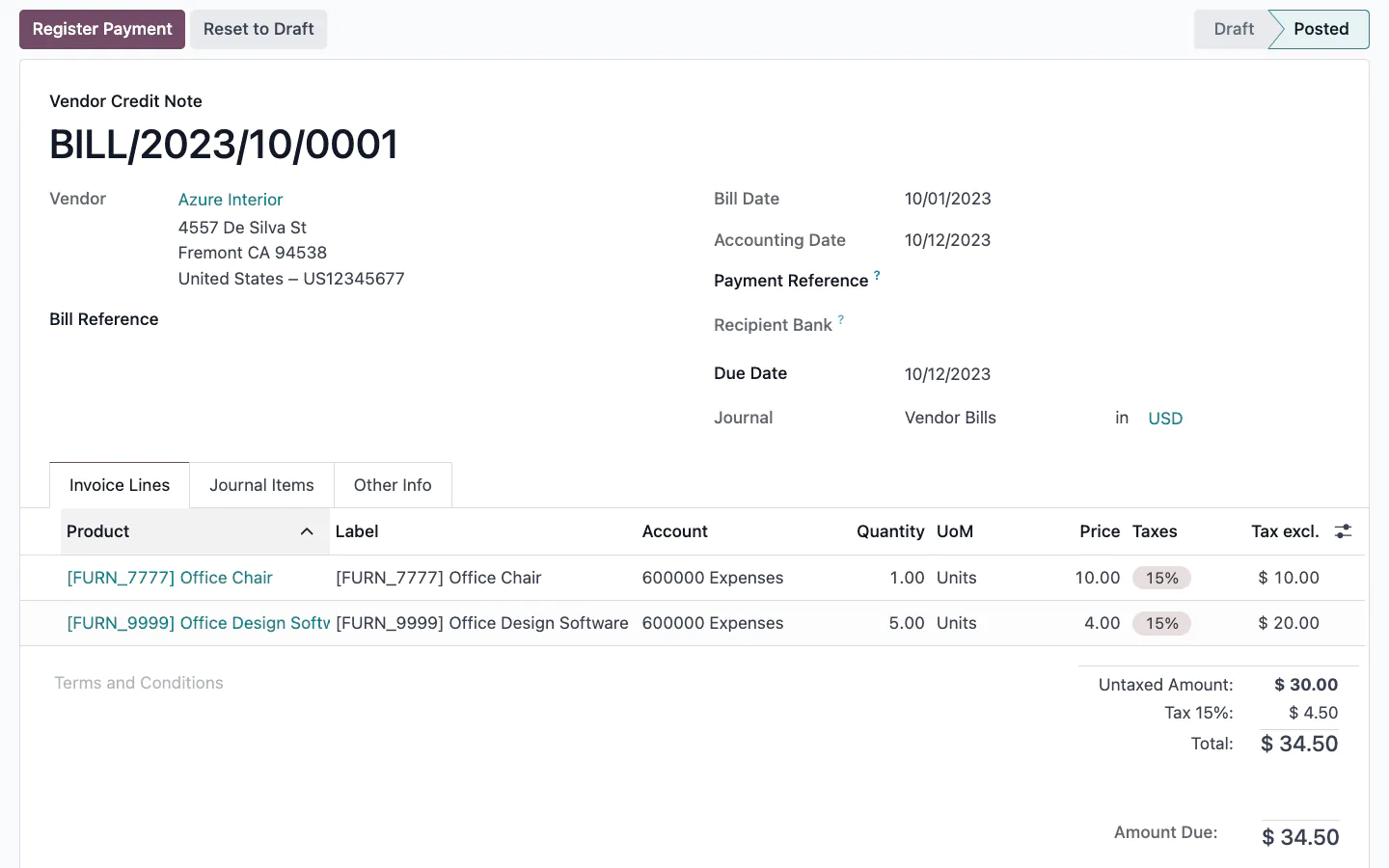
FreeAgent has an unusual price for many UK owners: nothing. It is free for as long as you keep a business current account with NatWest, Royal Bank of Scotland or Ulster Bank, and sole traders and limited companies with a Mettle account get it free if they make at least one transaction a month. FreeAgent is on HMRC’s list of software compatible with Making Tax Digital for both VAT and Income Tax, so a sole trader can send quarterly updates and the final declaration from the same place where the bank feed lands. Smart Capture reads up to 10 receipts and bills a month as standard, with unlimited capture as a paid add on. The limitation is geography. The tax timeline, the returns and the reports all assume UK rules, so a business that trades and files mainly in another country should look elsewhere.
5. Coconut
- Sole traders
- Landlords
- HMRC recognised
Pricing: Bookkeeping £99.99 a year; MTD filing from £129.99 a year; MTD Bridging £49.99 a year; 14 day free trial without card details.
Best for: UK sole traders and landlords who want a phone first bookkeeping app that gets them ready for quarterly reporting.
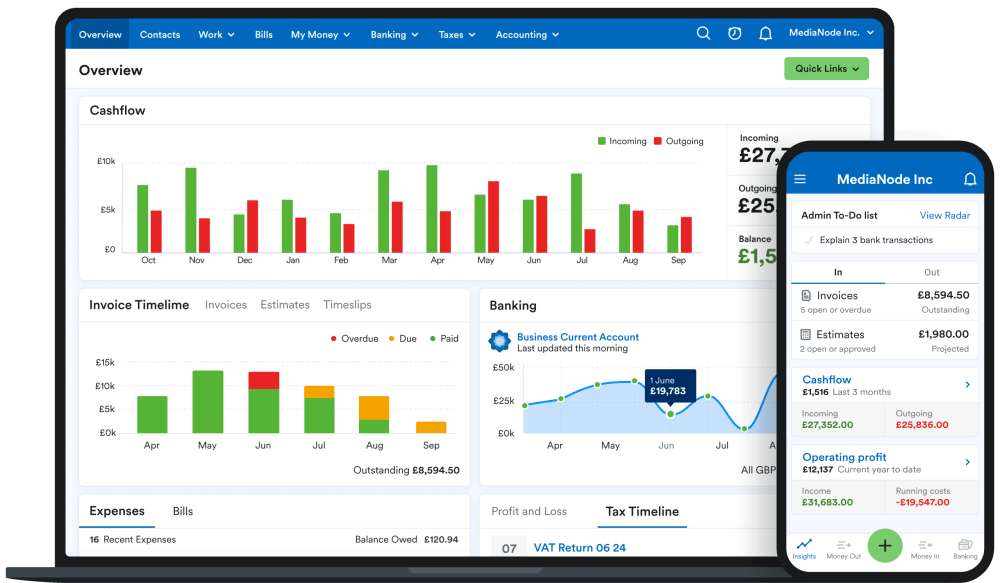
Coconut does less than FreeAgent, which suits people who work alone. It connects to your bank, imports transactions automatically, suggests categories, lets you snap a receipt and attach it to the transaction, and prepares the self employment and property pages of the Self Assessment return. The MTD filing option is HMRC recognised for Making Tax Digital for Income Tax and includes the year end declaration. MTD Bridging is the option I would look at first: if you already keep your books in a spreadsheet and do not want to change, Coconut uploads the completed sheet and submits the quarterly update to HMRC, which is the cheapest route to compliance in this list. Coconut is free for two years if you open a Zempler business account inside the app. Its limit is its audience. Coconut is built for sole traders and landlords, so if you incorporate, plan on moving to a tool such as FreeAgent.
6. Hnry
- Tax paid as you earn
- Accountant included
- UK, AU, NZ
Pricing: 1% plus VAT of each payment into your Hnry account, capped at £600 plus VAT a year (UK pricing).
Best for: freelancers and sole traders in the UK, Australia or New Zealand who would rather never open a ledger.
Hnry takes bookkeeping off your hands entirely. Clients pay your invoices into a Hnry account; each time money arrives, Hnry calculates and deducts the tax due, pays it to the tax office, and passes the rest to your own bank account. Expenses are logged in the app, invoices and quotes go out from it, and Hnry’s accountants file the returns. It started in New Zealand and Australia, where it describes itself as the largest sole trader accounting service, and now operates in the UK, where it states it is fully compliant with Making Tax Digital and sends the quarterly updates itself. Check the cost model before you sign up. A percentage fee is cheap at low income and reaches its cap at £60,000, as the calculation above shows. It also means your income passes through a third party account, and the service is built for sole traders only, so partnerships and limited companies are out of scope.
7. Found
- Banking plus books
- Schedule C
- Receipt matching
Pricing: Found is free; Found Plus costs $35 a month or $26.25 a month billed annually; Found Pro costs $80 a month or $60 a month billed annually.
Best for: US freelancers and single owner businesses who want their business account and their books in one app.
Found is a business account with bookkeeping built in. Because your business money already moves through Found, transactions arrive without a feed to set up, and rules categorize them as they post. The free tier includes a lot: receipt scanning and matching, split transactions, a chart of accounts, custom tags, profit and loss reports, unlimited invoices with reminders, mileage and home office tracking, and real time tax estimates with a Taxes Pocket that sets money aside. At year end it generates Schedule C, or Forms 1120 and 1120S for corporations, which removes a common handoff step. Found is a financial technology company, and its debit card is issued by Lead Bank. The limitation is that everything depends on running your business money through Found; if you keep your main account at another bank you can import transactions, but the automatic advantage shrinks. Its tax output is built around US federal forms.
8. Dext
- Receipt capture
- 36+ integrations
- Supplier statements
Pricing: from $25.21 a month (USD, excluding VAT, $302.50 billed annually) for 5 users and 250 documents a month; free trial before you pay.
Best for: businesses with a pile of paper receipts and supplier bills that already use QuickBooks, Xero or Sage.
Dext is receipt software. It is on this list because missing receipts cause more year end trouble in small business books than almost anything else. You photograph a receipt, forward a bill by email or upload a PDF, and Dext extracts the supplier, date, amount and tax, then publishes the entry to your accounting program. Its help centre lists more than 36 accounting integrations. The base allowance includes 250 documents a month, 10 sheets of bank statement extraction and 5 supplier statements, and each extra user adds 50 documents. When you hit the monthly allowance, uploads still work but extraction pauses until the next billing period, so a seasonal business should size the plan to its busiest month, not its average. Dext needs a ledger to publish into; on its own it is a tidy receipt archive. A sole trader with 20 receipts a month can get the same result from the capture built into FreeAgent, Coconut or Found.
9. Bench
- Human bookkeeper
- Catch up books
- Tax filing tier
Pricing: Bookkeeping Light $199 a month or $1,910 a year; Bookkeeping $399 a month; Bookkeeping + Tax $649 a month.
Best for: US owners who are months behind and want someone else to do the books, not just software.
Bench is a bookkeeping service with its own software, and its recent history is worth knowing before you hand over your records. According to Bench’s own about page, it paused operations at the end of 2024, was acquired within days by Employer.com, and resumed service early in 2025 with its in house team retained. Today the offer is a dedicated bookkeeper reachable by phone, message and video, monthly books, and year end tax ready financials. A separate QuickBooks Online track keeps your books inside QuickBooks, with the entry tier covering cash basis books and up to 500 transactions a month. Catch up bookkeeping for the current year is free with an annual plan, which is often the real reason people sign up. The pause holds a lesson for every service here: export your ledger and reports regularly so that a change of owner never leaves you without records.
10. Pilot
- AI plus bookkeeper
- Accrual option
- Startup focus
Pricing: Essentials $99 a month for up to $100,000 in monthly expenses; Core from $299 a month billed annually; Custom on quote.
Best for: US startups and growing small businesses that will soon need accrual books for investors or lenders.
Pilot sells bookkeeping at two depths. Essentials uses AI to categorize transactions, reconcile accounts and close the books each month on a cash basis, with a standard chart of accounts and a year end package for whoever prepares your taxes. Support at that tier runs through in app messaging. Core adds a US based bookkeeper who reviews and explains the books, cash or accrual basis, data pulled from payroll, payables, inventory and payment platforms, a custom chart of accounts, and reports by the 10th business day. That accrual option matters: a startup raising money usually needs accrual statements, and switching later costs a cleanup. Tax filing is a separate purchase that must be bought with Pilot Bookkeeping, starting at $1,000 a year for a single member LLC. The limitation is fit for the very small. A sole proprietor with simple cash books pays more here than for Found or Coconut and gets capacity they will not use for years.
Record keeping rules by country
Whatever program you choose has to keep your records for at least as long as your tax authority can ask for them. These periods are the general rules published by each authority; special cases such as property, losses or unfiled returns run longer.
| Country | General retention period | Source |
|---|---|---|
| United States (IRS) | 3 years after filing in most cases; 7 years for a bad debt or worthless securities claim; employment tax records at least 4 years | IRS: How long should I keep records? |
| United Kingdom (HMRC) | Sole traders: at least 5 years after the online filing deadline for the tax year | GOV.UK: Business records if you are self employed |
| Canada (CRA) | 6 years from the end of the last tax year the records relate to | CRA: Where to keep your records and for how long |
| Australia (ATO) | Most records 5 years | ATO: Overview of record keeping rules for business |
In the UK, Making Tax Digital for Income Tax changes what a bookkeeping program must do. According to HMRC’s eligibility guidance, sole traders and landlords with qualifying income over £50,000 in the 2024 to 2025 tax year must use it from the tax year that starts in 2026, those over £30,000 from 2027, and those over £20,000 from 2028. In scope, you keep digital records and send quarterly updates from compatible software. HMRC keeps a tool to find compatible software; FreeAgent, Coconut and Hnry in this list state that they support it.
How to choose a bookkeeping program
Decide who will do the work first, then check these criteria in order. Each one has eliminated a tool for someone.
How transactions get in. A live bank feed saves the most time, as the calculation above shows. Statement import is fine at low volume. Check that your own bank is supported before you commit, because a feed that breaks every few weeks is worse than a monthly import.
Reconciliation. The program should let you mark each transaction as matched against the statement and show the difference when balances disagree. Without reconciliation you have a list of transactions, not books.
Receipt capture. Count your receipts in a normal month. Built in capture limits range from a handful to hundreds; FreeAgent’s standard allowance is 10 a month, Dext’s base allowance is 250.
Cash basis or accrual, single entry or double entry. Most sole traders can use cash basis books. If you invoice on credit, hold stock or plan to raise money, you will want double entry books that support accrual reporting, which rules out the simplest apps.
Chart of accounts and accountant access. Your accountant should be able to log in or receive a clean export. A free plan that blocks accountant access adds cost at year end.
Tax filing in your country. A UK sole trader needs MTD compatible software from the year their income crosses the threshold. A US owner benefits from Schedule C output. Elsewhere, local charts of accounts matter more than any feature.
Data export. Before signing up, find the export function and check that it gives you the general ledger, not only reports. The Bench pause showed why.
Where revenue comes from. If you bill by the hour, the bookkeeping program only sees the invoice. The hours behind it have to be tracked somewhere, which is where a time tracking and invoicing tool fits upstream of the books.
Where small business bookkeeping goes wrong
The program you pick matters less than the habits around it. These six cause most of the cleanup work that accountants end up billing for.
Business and personal money in one account. Bookkeepers repeat this more than any other advice, and owners skip it more than any other. Every mixed account means hours of sorting at year end and a weaker position if a tax authority asks questions. Open a separate business account before you choose software.
Trusting the rules without reviewing them. Automatic categorization is only as good as the rule that fired. A rule that files every card payment at a hardware store as office supplies will quietly misstate costs for a year. Review the automatic matches monthly, as the worked example assumes.
Receipts that never meet their transaction. A transaction without a receipt is a deduction you may not be able to defend, and in VAT or GST countries it can also be tax you cannot reclaim. Capture receipts the day you get them. A shoebox handed over at year end usually costs more in accountant time than a year of any app here.
Skipping reconciliation for months. Books that are reconciled monthly take minutes to fix. Books left for a year take days, which is why catch up bookkeeping is a product category of its own.
Revenue that never reaches the books. Service businesses lose money before the books even start. Hours that are worked but never logged are never invoiced, so they never appear in the ledger at all, and no reconciliation will find them.
Records trapped in one provider. Desktop files without backups, and cloud services that change hands, both put years of records at risk. Export the ledger at least once a quarter and keep it for the retention period in your country.
Best pick by situation
There is no single best bookkeeping for small business owners, but most situations point clearly to one tool.
- You want free books on your own computer: Manager. No time limits and no usage limits, as long as one person does the work.
- You want free automated matching and work outside the US or UK: Odoo Accounting, as long as accounting is the only app you need.
- UK sole trader or limited company with a NatWest group or Mettle account: FreeAgent, which costs nothing with that account and covers MTD for VAT and Income Tax.
- UK sole trader or landlord facing quarterly reporting on a small budget: Coconut, or its MTD Bridging option if you want to keep your spreadsheet.
- Freelancer in the UK, Australia or New Zealand who never wants to touch tax: Hnry, while income stays where the percentage fee makes sense.
- US freelancer or single owner company: Found, because the free tier includes receipts, invoices and Schedule C.
- Drowning in paper receipts with books already in QuickBooks or Xero: Dext.
- Months behind and ready to pay someone: Bench for catch up and ongoing books, Pilot if you need accrual statements for investors.
- Revenue comes from billable hours: pair any of the above with actiTIME so tracked hours become invoices before they reach the books.
FAQ
Can I keep my books in a spreadsheet?
Yes, if you have few transactions and keep receipts alongside the sheet. The record keeping rules above say which records to keep and for how long rather than which program to use. The exception is the UK once Making Tax Digital for Income Tax applies to you: a spreadsheet then needs bridging software, such as Coconut’s MTD Bridging option, to send quarterly updates to HMRC.
How often should a small business do its bookkeeping?
Monthly is the minimum for most small businesses, timed to the bank statement so you can reconcile. Retailers and businesses with daily cash takings should record weekly or daily. With a bank feed, a weekly 15 minute review keeps the monthly close short.
Is QuickBooks worth it for a very small business?
It is worth it when your accountant works in QuickBooks or you expect to add payroll and inventory soon, because switching later costs more than the subscription difference. A sole trader with simple cash books usually pays less with Found in the US or Coconut in the UK. Our small business accounting software comparison sets out QuickBooks Online’s tiers and year one cost.
Conclusion
Start with who will keep the books. If it is you, Manager and Odoo Accounting cost nothing and handle the core jobs. If you want software to do most of it, FreeAgent and Coconut fit UK sole traders, Found fits US freelancers, and Dext fixes the receipt problem for anyone already on QuickBooks or Xero. If you want a person to do it, Hnry, Bench and Pilot take the work off your desk at very different prices.
If your revenue comes from client hours, make sure every billable hour reaches an invoice before it reaches the books. Start a free trial of actiTIME with full features for 30 days; after the trial, teams of up to 3 users can keep using it for free.