

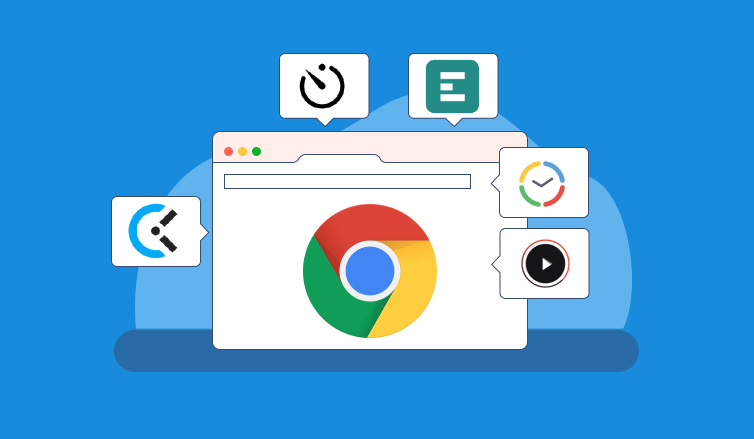
Every one of the best productivity Chrome extensions in this guide was checked on the Chrome Web Store in August 2026 and is still listed, still updated, and carrying the rating shown. That sounds like a low bar until you check the lists currently ranking for this topic.
Half the extensions in the average productivity Chrome extensions roundup no longer exist. They were good in 2019, the article was never revisited, and the recommendation quietly became a dead link. This guide names the ones that have gone, lists 10 that are genuinely live with their current store ratings, and covers the permission question almost nobody asks before clicking install.
Extensions still being recommended that no longer exist
These five appear on best productivity Chrome extensions lists across the web, including on earlier versions of this page. None of them returns a result on the Chrome Web Store today.
- Personal Blocklist. Google’s own site blocker, long since discontinued. Searching the store returns unrelated blockers rather than the original.
- Ultidash. Returns no search results at all. The listing is gone.
- Social Fixer. No longer surfaces in a Chrome Web Store search. The project has a history of being restricted on the platforms it modified.
- Strict Workflow. The original pomodoro blocker is gone, though a successor with the same 25 and 5 minute pattern is listed under a different name and appears below.
- Comments to Cats. The comment-replacing novelty extension no longer exists; searching the name returns an applicant tracking tool instead.
This matters beyond tidiness. An extension that has been pulled stops receiving updates first and disappears later, and a browser extension without maintenance is a security question rather than a productivity one. If a list recommends any of the five above, it has not been checked since roughly 2019.
The 10 best productivity Chrome extensions compared
Ratings were read from each extension’s Chrome Web Store listing in August 2026. Every one of the productivity Chrome extensions below is live and still maintained. Extensions are grouped by the job they do, because installing three that do the same thing is the most common mistake here.
| Extension | What it does | Store rating |
|---|---|---|
| actiTIME Time Management Assistant | Tracks time against tasks from the browser | 4.8, listed as Featured |
| Strict Focus | Blocks sites on a 25 and 5 minute pomodoro cycle | 4.9 |
| Todoist for Chrome | Captures tasks from any page | 4.7 |
| RightInbox | Email reminders, tracking and send later in Gmail | 4.6 |
| Momentum | Replaces the new tab page with a single daily focus | 4.5 |
| Grammarly | Checks writing everywhere you type | 4.5 |
| StayFocusd | Caps daily time on distracting sites | 4.4 |
| OneTab | Collapses open tabs into one list | 4.4 |
| Mindful Browsing | Interrupts habitual browsing with a prompt | 4.4 |
| Forest | Gamifies focus sessions by growing a tree | 3.8 |
The extensions in detail
actiTIME Time Management Assistant
- Time tracking from the browser
- Task list without switching tabs
- Syncs to the actiTIME account
- Rated 4.8 and listed as Featured
Most extensions on this list help you avoid distraction. This one answers the question that comes afterwards, which is where the day actually went. The actiTIME browser extension puts your task list and a running timer in the toolbar, so time gets recorded while you work rather than reconstructed on Friday from memory.
Everything it records syncs to the actiTIME account, so the same entries feed timesheets, reports and, where billing is enabled, invoices. That is the practical difference from a standalone timer extension: the data has somewhere to go.
It is only worth installing if your team already uses actiTIME or is trying it, since the extension is a front end rather than a standalone tool. On that basis it carries a 4.8 store rating and a Featured badge.

actiTIME enables us to balance workload better
actiTIME is very robust, integrated well into your business process, and most important, helps you focus on your business instead of monkeying around with technology.
Strict Focus
- 25 and 5 minute pomodoro cycle
- Site blocking during work blocks
- Enforced rather than advisory
- Rated 4.9
This is the successor to Strict Workflow, and it keeps the idea that made the original worth using: the block is enforced. Twenty five minutes of work with distracting sites genuinely unreachable, then a five minute break where they are not.
The distinction from a gentle reminder matters more than it sounds. An extension that asks whether you are sure will be clicked through within a week. One that simply refuses changes behaviour, which is why this has the highest rating on the list at 4.9.
Todoist for Chrome
- Add tasks from any page
- Turns the new tab into a task list
- Syncs with the full Todoist app
- Rated 4.7
Capture is the weak point of most task systems. You think of something mid-page, you do not want to leave the page, and the thought is gone. Todoist’s extension solves exactly that: add a task from wherever you are, including the page itself as a link, and deal with it later.
It assumes you already use Todoist, so it is a companion rather than a standalone tool. If you keep tasks somewhere else, check whether that tool has its own extension before adding a second system.
RightInbox
- Send emails later
- Reminders if nobody replies
- Open tracking and notes
- Rated 4.6
RightInbox adds scheduling, follow up reminders and private notes to Gmail. The feature that earns its place is the reminder: if a message goes unanswered by a date you set, it returns to the top of your inbox rather than being forgotten.
Anyone whose work depends on chasing people, which is most of sales, recruitment and client services, gets more from this than from any focus tool. Note that it reads and writes in your mailbox, so it belongs in the category where the permission question below applies most sharply.
Momentum
- Replaces the new tab page
- One stated focus for the day
- Weather, quote and to do list
- Rated 4.5
Momentum turns every new tab into a photograph, the time, and one question: what is your main focus for today? The mechanism is simple and slightly manipulative in a way that works. Opening a new tab is usually the first move of a distraction, and being asked to name your priority interrupts it.
It is the least demanding change on this list because it requires no habit, only an install. If you want your new tab to be a dashboard rather than a jumping-off point, it is the standard choice at 4.5 stars.
Grammarly
- Grammar and spelling everywhere
- Tone and clarity suggestions
- Works in email and web apps
- Rated 4.5
Grammarly checks anything you type in the browser, which in practice means email, ticket replies, documents and chat. Its productivity value is not the corrections themselves but the rereads it saves: fewer messages sent and immediately regretted, fewer second drafts.
It sees the text you type, which is the trade you are making. For most business writing that is acceptable; for anything confidential, check your organisation’s position before installing it rather than after.
StayFocusd
- Daily time budget per site
- Blocks once the budget is spent
- Nuclear option for hard deadlines
- Rated 4.4
StayFocusd takes a different approach from a straight blocker: you get an allowance. Ten minutes a day on the sites you name, and when it is gone it is gone until tomorrow. That suits people who do not want to quit a site entirely but keep losing forty minutes to it.
The settings are deliberately difficult to undo mid-day, which is the point. If your problem is a genuine habit rather than an occasional lapse, the allowance model tends to survive longer than an outright ban.
OneTab
- Collapses all tabs into a list
- Frees memory immediately
- Restore individually or all at once
- Rated 4.4
One click turns forty open tabs into a single page of links. Nothing is lost, memory is released, and the visual noise disappears. For anyone who keeps tabs open as a to do list, this converts that habit into something that actually resembles a list.
It is the smallest change on this list with the most immediate effect, and it is worth installing before any of the focus tools. Half of what feels like distraction is simply too many things visible at once.
Mindful Browsing
- Interrupts habitual site visits
- Asks what you would rather do
- Gentle rather than enforced
- Rated 4.4
Mindful Browsing sits between doing nothing and blocking outright. When you open a site you have flagged, it interrupts with a reminder of what you said you would rather be doing, and you choose. No lockout, no timer, just a pause at the moment the habit fires.
Whether that is enough depends entirely on you. People who bounce off hard blockers by disabling them often stay with this for months, which makes it worth trying before the stricter options rather than after.
Forest
- Grow a tree during a focus session
- Leaving the session kills the tree
- Pairs with the mobile app
- Rated 3.8
Forest plants a virtual tree when you start a focus session, and the tree dies if you leave. It is the best known gamified focus tool and it works well for people who respond to that kind of motivation.
It carries the lowest rating on this list at 3.8, which is worth stating plainly rather than hiding: reviewers are split between people who find the mechanic motivating and people who find it gimmicky. Try it before committing, and if the idea of a dying tree does not move you, StayFocusd or Strict Focus will suit you better.
Check the permissions before you install
Chrome shows what an extension can access at the moment you install it, and almost nobody reads it. The phrase to look for is “Read and change all your data on all websites”, which is exactly as broad as it sounds.
Some extensions genuinely need it. A grammar checker has to see what you type, and a site blocker has to see what you are opening. The question is not whether the permission is scary but whether it matches the job:
- Does the permission fit the function? A new tab replacement asking to read every site is doing more than it says.
- Is it still being updated? An abandoned extension keeps its permissions and stops getting fixes. This is why the five dead extensions above matter.
- Who publishes it? A named company with a real website is a different risk from an anonymous listing.
- What happens if it is sold? Extensions change hands, and the new owner inherits the access. Popular free extensions have been bought and repurposed before.
How many extensions is too many
Every extension costs something in memory and startup time, and several run on every page you open. The practical ceiling is lower than people expect, and the failure mode is not a crash but a browser that feels slightly slow in a way nobody traces back to the cause.
A workable rule is one per job. One blocker, one tab manager, one task capture, one writing aid. The moment you have two extensions solving the same problem, one of them is pure overhead, and it is usually the one you installed first and forgot.
If your browser has become slow, disable everything, then re-enable one at a time over a few days. That finds the culprit faster than guessing, and it usually ends with a shorter list than you started with.
Frequently asked questions
What is the best Chrome extension for focus and productivity?
For focus specifically, Strict Focus, which carries the highest rating on this list at 4.9 and enforces a 25 and 5 minute cycle rather than merely suggesting it. If your problem is losing time to a handful of sites rather than lacking structure, StayFocusd’s daily allowance model works better. If the problem is knowing where your hours went rather than protecting them, a time tracking extension answers a different and often more useful question.
What are the best Chrome extensions for productivity in 2026?
The 10 best productivity Chrome extensions listed above, all verified as live on the Chrome Web Store in August 2026: actiTIME Time Management Assistant, Strict Focus, Todoist, RightInbox, Momentum, Grammarly, StayFocusd, OneTab, Mindful Browsing and Forest. The more useful answer is that the year matters less than whether a list has been checked, since roughly half the extensions recommended in older roundups no longer exist.
How many productivity Chrome extensions should I install?
One per job, and fewer than you think. Each extension consumes memory and many run on every page, so a long list slows the browser you installed them to speed up. Two tools solving the same problem means one is doing nothing except costing performance and holding permissions.
Are Chrome extensions safe?
They are as safe as what you grant them. Many legitimately need to read and change data on the sites you visit, which means the real checks are whether the permission matches the stated function, whether the extension is still being updated, and whether the publisher is identifiable. Abandoned extensions are the genuine risk, because they keep their access and stop receiving fixes.
Extensions help, tracking tells you if they worked
Productivity Chrome extensions can only take you so far. A blocker stops you opening one site. It cannot tell you whether the week actually got better, and that is the question worth answering after a month of trying any of this.
actiTIME records where the hours went, by project and by task, so the effect of a change shows up as a number rather than a feeling. Start a free 30 day trial. No credit card required, and the free version covers up to 3 users afterwards.