



If you’ve been dreaming of merging your passion for architecture with a successful career in project management, now is the time to make it happen. Becoming a successful architectural project manager requires plenty of skill and dedication — but those willing to put in the hard work will be rewarded with excellent job opportunities, ample salary potential, and an extremely rewarding profession.
In this blog post, we’ll discuss strategies on how to become a knowledgeable and well-versed architectural project manager so that you too can take that first step towards achieving your career goals.
Who is an architectural project manager?
An architectural project manager is a highly skilled professional who is responsible for leading and coordinating all aspects of an architecture project. They are typically trained in architecture, engineering, or construction management, and have extensive experience in planning, designing, and executing complex building projects.
The primary role of an architectural project manager is to ensure that the project is completed on time, within budget, and meets all the necessary quality and safety standards. To achieve this, they must work closely with a team of architects, engineers, contractors, and other stakeholders to develop and implement a comprehensive project plan.
Architectural project managers work across a range of settings – architecture firms, construction companies, real estate developers, engineering consultancies, and government or public works departments most commonly employ this role.
Overall, the role of an architecture project manager is critical in bringing construction designs to life. Below, you will find a comprehensive list of job responsibilities it is comprised of.
Project architect vs. architectural project manager
The two titles get used interchangeably often enough that it’s worth pulling them apart. A project architect stays close to the design itself – they’re the technical author of the drawings, responsible for design intent carrying through from concept to construction documents, and they usually still hold a professional license. A project manager (or architectural project manager) sits closer to the business side of the same project – budget, schedule, contracts, and keeping the client and the wider team aligned.
Some firms split these into two people working side by side on the same project. Smaller practices often expect one person – typically titled “architectural project manager” – to do both. That’s usually why job postings for “architectural project manager” and “project architect” end up describing overlapping duties: the responsibilities genuinely blend at smaller firms, even though the titles describe two distinct focuses. Either way, both roles sit inside the same broader discipline of architectural project management – the split is about focus, not about who “really” runs the project.


A day in the life
Job descriptions list responsibilities; they rarely show what a day actually looks like. In practice, most days mix office work with fieldwork and land somewhere between the two:
- A morning check-in with the internal design team to flag anything that’s blocked or behind
- Reviewing contractor RFIs and submittals that came in overnight
- A client call to walk through a design revision or a budget update
- Updating the project budget once new vendor pricing comes in
- A site visit to check progress against the drawings
- Logging notes and updating the task list before the day closes out
The mix shifts by phase – design-heavy weeks lean toward reviews and client meetings, construction-heavy weeks lean toward site visits and RFI turnaround – but the constant is switching between creative, financial, and interpersonal work multiple times in the same day.
Job responsibilities
Thirty-plus line items is a lot to scan in one flat list, so here they are grouped by the kind of work involved – all the same responsibilities, just organized.
Planning and budgeting
- Preparing project proposals and bids, including project timelines, budgets, and strategies.
- Developing and managing project budgets.
- Developing and implementing project schedules.
- Ensuring that projects are fully scoped and that all necessary permits are secured.
- Approving and tracking invoices, purchase orders, and change orders.
- Developing and implementing quality control programs.
Team and stakeholder coordination
- Coordinating and managing construction teams, including architects, subcontractors, and other stakeholders.
- Managing subcontractor and vendor relationships.
- Facilitating design meetings with internal design teams and external consultants.
- Developing and implementing project management tools and methodologies.
- Developing and maintaining strong relationships with clients.
- Mentoring and leading project teams.
Execution, compliance, and quality
- Overseeing project execution to ensure compliance with design specifications, building codes, and quality standards.
- Conducting site inspections and providing feedback to construction teams.
- Identifying and mitigating project risks.
- Ensuring that projects are executed safely and in compliance with occupational health and safety standards.
- Coordinating with regulatory agencies when necessary.
- Managing and mitigating project scope creep.
- Ensuring that projects are environmentally sustainable.
- Ensuring that projects are delivered to a quality standard for clients.
Reporting and closeout
- Establishing project benchmarks and reporting progress to stakeholders.
- Ensuring that projects are completed within established timelines.
- Reviewing project contracts and ensuring that they are complied with.
- Preparing and presenting project status reports.
- Resolving project-related issues and conflicts.
- Ensuring that project documentation is up-to-date and accessible.
- Coordinating project closeout activities including compliance with punch list items and project sign-off.
- Coordinating project commissioning / testing and training of owner’s representative / end user.
- Developing and implementing project performance metrics.
- Ensuring that project teams adhere to company policies and procedures.
Career path
The title sits partway up a fairly consistent ladder, reachable by one of two entry routes:
- Design track: intern architect → junior architect → project architect → architectural project manager
- PM track: project coordinator → assistant project manager → architectural project manager (management-focused from the start, no design-side detour)
From there, the usual next steps are:
- Senior project manager
- Director of project management, or a principal-level role
- Independent practice or consultancy – a branch off the ladder rather than a further step up it
Average time in the field before reaching this title runs around 10 to 11 years, though firm size and how early someone takes on PM-heavy responsibilities can shift that considerably.
Job postings for this role show up under several near-identical titles – architectural project manager, architect project manager, or just architectural manager (occasionally architecture manager or architect manager) – so it’s worth searching broadly rather than filtering by one exact phrase.
Common challenges
The day-to-day tasks are one thing; the recurring friction points are another. A few show up on nearly every project:
- Design vs. budget conflicts – clients want more than the budget supports, and finding the workable middle ground is a constant negotiation.
- Scope creep – small additions add up fast if they aren’t tracked against the original scope from day one.
- Permit delays – timelines can slip for reasons entirely outside the team’s control.
- Team misalignment – with architects, engineers, contractors, and clients all in the mix, messages get lost without a deliberate communication plan.
- Construction surprises – site conditions that don’t match the drawings force design changes mid-build.
Scope creep and design-vs-budget conflicts are the two that tend to compound if they aren’t caught early. Use actiTIME to compare time invested against your original task and project budgets as the work happens, so a scope change shows up as a budget variance right away instead of at the final invoice – click here to see how budget tracking works.
Skills and qualifications checklist
To help you determine if you have what it takes to be a successful architectural project manager, we compiled a comprehensive list. It covers everything from educational requirements and technical skills to interpersonal abilities and project management experience – review it against your own background to spot areas worth developing.
Educational requirements
Real job postings for this role break down to roughly 77% requiring a bachelor’s degree, 19% a master’s, and a small remainder accepting a high school diploma plus enough relevant experience.
- A degree in architecture or a related field
- Coursework in management, business administration, or project management
- Additional training or certifications in construction management or project management
Project management skills
Around 20% of job postings for this role list project management explicitly as a requirement, and 15% list planning specifically – both treated as core rather than a nice-to-have.
- Experience managing complex architectural projects from start to finish
- Developing and managing a project schedule to ensure timely completion
- Creating and managing a realistic, accurate project budget
- Developing and enforcing project standards and protocols
- Identifying and mitigating project risks and issues
- Communicating project status effectively to stakeholders
- Managing project resources, including personnel and materials
- Coordinating effectively with project team members, contractors, and vendors
- Ensuring project compliance with relevant codes, regulations, and standards
- Managing project teams comprising individuals with varied backgrounds and skill sets
Technical skills
Construction knowledge shows up in about 26% of job postings for this role, and AutoCAD specifically in about 15% – both worth naming directly on a resume rather than folding into a generic “technical skills” line.
- A thorough understanding of architectural design principles and practices
- Producing and interpreting architectural drawings, including floor plans, elevations, and section drawings
- Using architectural software, including AutoCAD and Revit
- Interpreting and analyzing building codes, zoning laws, and other regulations
- Developing and interpreting construction documents, including specifications and contracts
- Cost estimating and budgeting for architectural projects
- Identifying and specifying suitable construction materials and systems
- Evaluating the environmental impact of architectural designs and materials
- Evaluating the safety and accessibility of architectural designs
Interpersonal skills
- Excellent written and verbal communication skills
- Negotiating conflicts and managing difficult stakeholders
- Establishing and maintaining effective relationships with project stakeholders, including clients, architects, engineers, contractors, and vendors
- Developing and maintaining professional relationships with project team members
- Motivating and leading project team members to achieve project goals
- Providing clear and constructive feedback on project team member performance
- Inspiring trust and confidence in project stakeholders
Leadership skills
Leadership appears in roughly 11% of job postings for this role and innovation in about 12% – both tend to get assessed less through credentials and more through how a candidate talks about past projects in an interview.
- Developing and articulating clear project goals and objectives
- Delegating project tasks to project team members effectively
- Adapting to changing circumstances and adjusting project plans accordingly
- Developing and implementing a risk management plan
- Developing and implementing a quality control plan
- Developing and implementing a safety plan
- Developing and implementing a sustainability plan
Construction site management
- Knowledge of construction safety regulations
- Managing a construction worksite in an efficient manner
- Ensuring that the construction site meets quality and safety standards
- Ensuring that all construction work is in compliance with codes and regulations
- Managing finances relating to construction and materials supply
- Liaising with suppliers and contractors in relation to the site
Other skills
- Knowledge of environmental regulations and requirements
- Addressing environmental concerns throughout the project life cycle
- Providing training and support to project team members
- Participating in development workshops, training sessions, and conferences
- Staying up to date with the latest trends and updates in the construction industry
- Leading teams in multidisciplinary projects
- Managing change effectively to ensure continuous improvement
- Fostering a positive work environment where people feel valued, and which fosters innovation and excellence
Tips on how to become an architectural project manager
1. Get more experience in the architecture industry
If you want to get ahead and become a respected professional, one of the best pieces of advice is to get more experience in the architecture industry. This can mean brushing up on existing skills, finding an apprenticeship, or interning at a design agency – whatever will help expand your knowledge and make you stand out as an expert.
Each accomplishment along the way will build up your credibility in the eyes of colleagues and employers alike, so be sure to write down any architectural experiences you have on your CV and keep promoting yourself whenever possible.
2. Work on your technical skills
The technical project components are equally or even more important than the creative and aesthetic ones in the end result of any structure. Hence, if you want to become a successful architectural project manager, take some time to work on your drafting and engineering skills. This will give you a leg up when creating detailed plans and blueprints that bring each building together and make sure it’s done safely and efficiently.
Besides, for any exceptional architectural project manager, it’s crucial to stay on top of the latest technological advances. This particularly applies to software for 3D and 2D CAD and other tools used in today’s digital-first design world.
As an architect, such tools are like paintbrushes. With skillful manipulation, they help to create highly detailed plans that dazzle minds and transform ideas into reality. Thus, if you can learn how to apply this software to work, you’ll be a valuable asset in any organization that builds projects.
3. Learn project management basics
Instead of having a single-minded focus on the prized goal of becoming an architect, getting additional familiarity with the basics of project management can be unbelievably helpful in terms of career advancement. So, be smart, take on this small step, and lock those basics down:
- Planning – Planning provides a roadmap for architects as they gear up to bring a project from concept to completion, setting out timescales and laying out the various processes in an orderly way. With careful planning comes greater efficiency and better results, allowing talented minds to work together toward creating something truly special in architecture.
- Estimation – Project estimation is like understanding how many jellybeans there are in a jar without counting them all one by one. It’s an educated guess that requires experience, knowledge, and analysis of potential costs of materials, labor, and other tangible inputs based on current market conditions and different project complexities.
- Cost control – With an eye always focused on financial resources, architects must be sure they are accounting for everything necessary to make their projects efficient and cost-effective. This means being aware of potential overspending and taking such preventative measures as budget reviews and cost analysis against expected outcomes. In doing so, it’s possible to avoid cost overruns and deliver the project within its allocated budget.
- Progress monitoring – It’s a process that involves regular measurement and evaluation of performance progress throughout the project lifecycle to ensure all the set objectives are met. It allows architects to identify issues, adjust methods or timelines as needed, and fix potential problems before they become too costly or delay the completion of the project.
- Data analysis – By collecting and understanding data, such as project costs and timelines, architectural professionals can better assess their progress and make informed decisions about their projects. It’s also great for spotting trends over time, helping project managers anticipate any issues that may arise down the road before it’s too late.
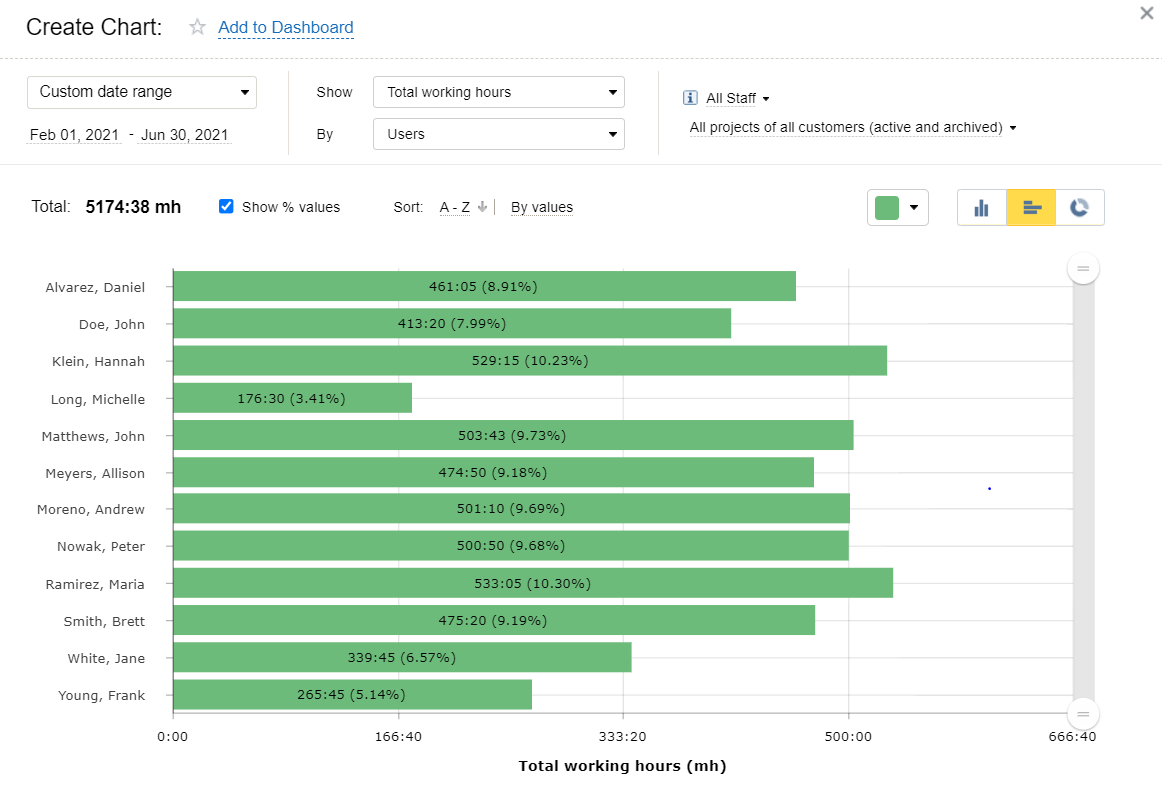
Use actiTIME to manage project resources, track team progress, collect accurate performance data, and analyze it in depth
4. Consider getting a certification
Project management and other certifications will help you complement your existing skill set, giving you a competitive edge in the field. Here are just a few certification options to consider:
- Project Management Professional (PMP) Certification: This globally recognized certification is issued by the Project Management Institute, and it shows that you have the necessary skills and knowledge to successfully manage complex projects. It covers such topics as project scope, time and cost management, communication, and risk management.
- Certified Construction Manager (CCM) Certification: This certification, issued by the Construction Manager Certification Institute, is specifically designed for construction managers and project managers in the construction industry. It covers project planning and execution, construction law and contracts, and safety management.
- Leadership in Energy and Environmental Design (LEED) Certification: This certification by the United States Green Building Council demonstrates your expertise in sustainable design and construction practices. It focuses on such topics as energy efficiency, water conservation, indoor air quality, and materials and resources.
- Autodesk Revit Architecture Certification: This certification is made for professionals working with Autodesk Revit Architecture software. It proves that you have the advanced knowledge and skills to effectively manage architectural projects using the software.
- Building Information Modeling (BIM) Certification: It verifies your expertise in using BIM software to manage construction projects and covers such topics as BIM modeling, design and analysis, and project collaboration.
5. Develop good communication skills
It might seem like a no-brainer, but one of the most important things to do if you want to become an architectural project manager is to really focus on developing your communication skills. Since you’ll be responsible for managing people and working with different teams, it’s critical that you know how to express yourself effectively + provide and understand feedback – it’s the key building block for success.
While having technical expertise is important too, exercising good judgment and forming strong relationships are essential in achieving sustainable results. Thus, prioritize improving your communicative and social skills, as they will take you far in becoming an effective professional.
6. Master people management
Becoming an architectural project manager requires strong leadership and business acumen, as well as the ability to masterfully manage people. After all, it’s not just the bricks and steel that build a structure – it takes a talented team of engineers, designers, and builders working together to make any architectural vision possible.
When working on your people management skills, you need to learn how to foster collaboration among different teams, create productive work environments, and anticipate problems before they arise in order to keep projects running smoothly.
Such a task can be intimidating at first but stick with it: mastering people management will give you the edge you need to succeed in this high-stakes profession.
7. Use efficiency-boosting project management tools
When managing architectural projects, it’s crucial to have a well-structured system in place to ensure everything runs smoothly, efficiently, and within budget. And actiTIME is an excellent solution for this purpose as it provides a comprehensive suite of tools and features designed for project managers in any industry.
By tracking time and costs with actiTIME, you get accurate data for project estimation. Utilizing it to inform your decision-making will help you stay on budget and avoid cost overruns that can derail your plans.
Once you have your estimates in place, make use of actiTIME’s task management features to assign tasks to employees, set priorities, and manage team workloads in real time. You can also set up automatic notifications to ensure that everyone stays on top of their deadlines.
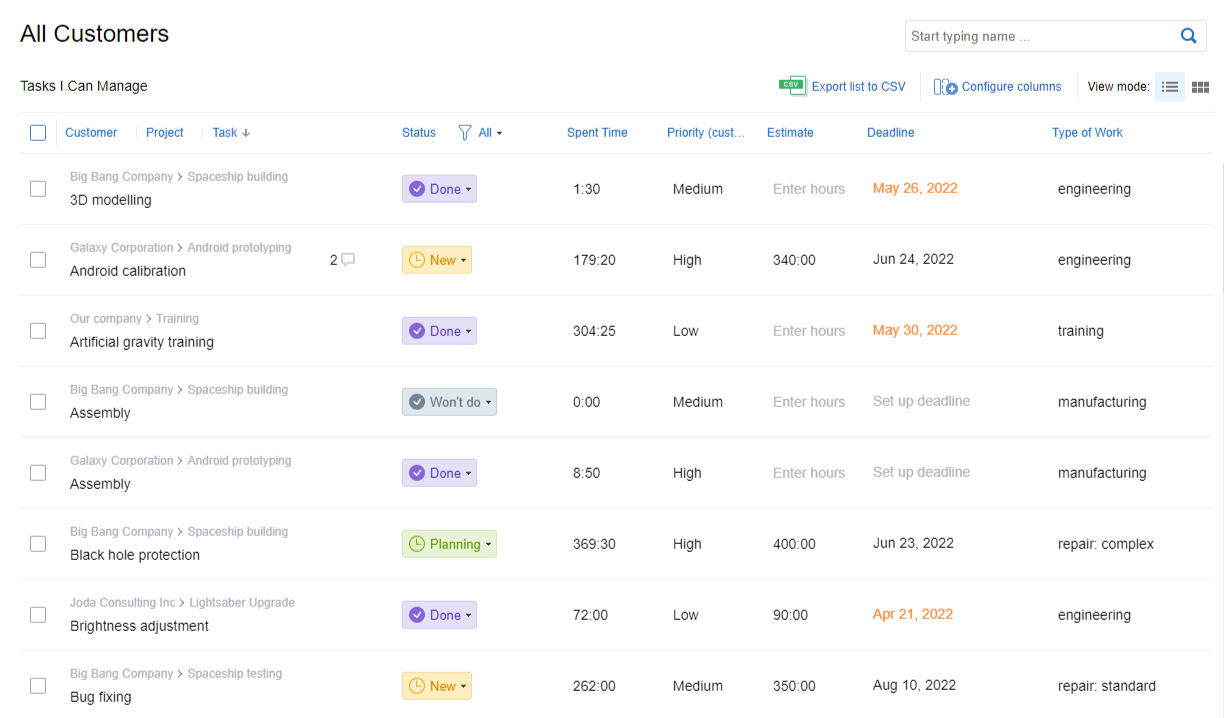
Manage multiple projects at once and keep all the essential task details in a single place
With actiTIME, you can easily monitor project progress, detect potential delays or issues as they arise, and take proactive measures to address them before they become major problems.
Besides, actiTIME lets you keep tabs on expenses and offers a bunch of reporting and analysis tools that help to identify any areas where you can improve efficiency, reduce waste, and increase profitability. You can generate customized reports on a range of metrics, including time and cost data, task estimates met, and team performance.
Stop spreadsheeting and let actiTIME do the heavy lifting for you! Sign up for a free online trial now!
Conclusion
Assembling teams of architects, engineers, and contractors to make the puzzle pieces of a project come together is no easy feat. After all, architecture itself is an art form fused together with science and mathematics. Yet if you’re interested in becoming an architectural project manager despite all difficulties, the tips outlined in this post are a great place to start.
Do your research, gain some experience in the field, and make sure you have a strong understanding of the design process – and you’ll be on your way to a successful career in architecture project management.
Thanks for reading!
FAQ
What is the average salary for an architectural project manager?
Estimates vary by source, but a reasonable current range is $90,000 to $116,000 a year in the US, with most figures clustering around $95,000–$110,000. ZipRecruiter’s percentile breakdown puts the typical range at $80,000 to $107,000, with the top 10% around $121,000. Location moves the number substantially – the highest-paying states run closer to Pennsylvania’s $124,000, Massachusetts’s $118,000, and New York’s $112,000 – and firm size and years of experience shift it further still.
Is PMP worth it for architects?
It depends on which direction the role is headed. If the job is drifting toward project management – overseeing budgets, schedules, and multi-disciplinary teams rather than authoring drawings – PMP is one of the most widely recognized credentials for that, and it signals real competency to employers outside the architecture industry too. If the role stays closer to the design side, a construction-focused or architecture-specific certification (Certified Construction Manager, LEED AP, or a software credential like Autodesk’s Revit certification) usually matches what’s actually being evaluated day to day more closely.
Do you need to be a licensed architect to become an architectural project manager?
Not necessarily – and that’s part of what separates the two titles. A project architect usually needs to be a licensed architect, since they’re the one legally responsible for the design. An architectural project manager’s core job is running the project, not sealing the drawings, so many come from a construction management or general project management background without ever sitting for licensure. That said, having the license (or being on track for one) still helps – it means fewer things get lost in translation between the design and business sides of the same project.
Can an architectural project manager work remotely?
Partially, and it depends on the project phase. Budget reviews, status reports, and client calls can happen from anywhere. Site visits, on-site coordination with contractors, and in-person design reviews can’t – which is why most firms treat this as a hybrid role at best, not a fully remote one, especially once a project moves into construction administration.