
Productivity tools for teachers are apps that take a recurring job off a teacher’s desk: lesson planning, written feedback, parent messages, differentiated materials, or the admin that fills the evenings. The best one for you depends on which of those jobs eats your week, so this guide sorts 11 tools by the task they remove, not by how popular they are.
The need is real. In the 2025 State of the American Teacher survey, US public school teachers reported working 49 hours a week on average, about ten hours more than they were contracted for. Every price and free version limit below comes from the vendor’s own pricing or help pages, and every entry says plainly what the tool cannot do.
Where teacher time actually goes
Teaching itself is less than half of a teacher’s working week. In the OECD’s TALIS 2024 survey, which covered 55 education systems, teaching took about 43% of full time teachers’ reported working time on average. Lesson planning took 14%, marking and correcting student work took 9%, and general administrative work took about 6%.
The smaller shares cause the most strain. Across OECD systems, 52% of teachers named administrative work as a source of stress, more than any other demand, and 40% said the same about too much marking (OECD, Results from TALIS 2024). In the US, the RAND 2025 State of the American Teacher survey puts the gap between paid and worked hours at about ten hours a week.
Productivity software for teachers can shrink that gap. A Gallup and Walton Family Foundation survey of 2,232 US public K-12 teachers found that the 3 in 10 who used AI tools at least weekly saved an estimated 5.9 hours a week, which Gallup equates to about six weeks over a 37.4 week school year. The savings went to the people who used a tool every week, so pick one or two that fit a weekly task rather than ten you open once.
If you want the habits that go with the tools, our guide to time management for teachers covers routines, batching and boundaries in detail.
How we picked these tools
Teacher productivity tools are easy to sign up for and hard to keep using, so a tool made this list only if it passed four tests:
- It removes a task teachers repeat every week, such as feedback, planning, family messages or admin, rather than adding a new activity.
- One teacher can start on a free version without waiting for a district purchase.
- It works alongside what schools already use, mainly Google Workspace, Microsoft 365 and common learning management systems.
- The vendor publishes its pricing and free version limits, so you know where the free part ends.
We dropped several tools from the earlier version of this article. Toggl Plan now redirects to Toggl’s homepage, the TeacherKit site no longer responds, and Freckle and OnCourse are bought by schools and districts rather than chosen by one teacher.
11 productivity tools for teachers compared
Here are the 11 apps for teachers side by side, with the job each one removes and what it costs.
| Tool | Task it takes off your desk | Free version and price |
|---|---|---|
| actiTIME | Seeing where your hours go; billing tutoring hours | Free for up to 3 users; from $5 per user per month |
| Google Classroom | Collecting, grading and returning work | No charge with Workspace for Education Fundamentals for qualifying schools |
| MagicSchool | First drafts of lessons, quizzes and parent emails | Free; Plus $8.33 per month billed yearly or $12.99 monthly |
| Diffit | Leveled versions of the same reading | Free Basic; individual $149.99 a year or $14.99 a month |
| Kami | Marking up PDFs and worksheets digitally | Free Basic; Teacher plan USD $149 |
| Text Blaze | Retyping the same comments and replies | Free; Pro $2.99 a month billed yearly or $3.49 monthly |
| TalkingPoints | Translated messages to families | Free for individual teachers; schools pay by quote |
| Classroomscreen | Timers, groups and instructions on the board | Free Basic; Pro $36 a year |
| PlanbookEdu | Weekly lesson plans you can share | Free; Premium $30 a year |
| Todoist | Keeping track of every small task and deadline | Free Beginner; Pro $60 a year or $7 monthly |
| Flow | Protecting a grading or planning block from distractions | Basic features free; Pro price not published on the website |
What each free version leaves out
Most teachers stay on free versions, so the useful question is where the free part stops. These are the limits each vendor states on its own pages.
| Tool | Free version limit | When teachers usually upgrade |
|---|---|---|
| actiTIME | Up to 3 users; no budgets, approvals, Chrome extension sync or QuickBooks integration | A tutoring business adds staff or needs budgets and approvals |
| Google Classroom | Originality reports on 5 assignments per class | The school wants unlimited originality checks (a paid edition) |
| MagicSchool | No unlimited generations or full output history; student tools not included | You generate daily and want to reuse past outputs |
| Diffit | Access to content made in the last 90 days; no export to Google, Canva or Microsoft formats | You want a reusable library across school years |
| Kami | 10+ essential tools out of 40+; no Google Classroom, Canvas or Schoology integration | You assign Kami work through your learning management system |
| Text Blaze | 20 snippets; form fields only to test | Your comment bank grows past 20 entries |
| TalkingPoints | Individual teacher use; no schoolwide rostering or admin controls | The whole school wants one messaging system |
| Classroomscreen | All 26 widgets, but you cannot save or share screens | You rebuild the same screen every lesson |
| PlanbookEdu | Unlimited weekly plans; no file attachments, standards, sharing or export | Your principal wants plans turned in or you attach worksheets |
| Todoist | 5 personal projects and 3 filter views | You want one project per class plus school duties |
| Flow | Apple devices only (iPhone, iPad, Mac, Watch) | Not published on the website |
The 11 best productivity tools for teachers
1. actiTIME
Key features:
- Timesheets
- Time reports
- Billing rates
- PDF invoices
actiTIME is project time tracking software built for billing, and it suits two kinds of educators. The first is a teacher who wants proof of where the unpaid hours go. You set up tasks such as grading, lesson planning, parent contact and admin, log time in a weekly timesheet or a calendar view with start and stop times, and the Time-Track Report groups the week by task. A month of entries shows whether grading or email is the real problem before you pay for another tool.
The second is a private tutor, a tutoring center or a language school that sells hours. Each project bills by type of work rates or by individual tutor rates, the Billing Summary Report totals what each family owes, and PDF invoices come from the same hours. Billing budgets show when a prepaid package of lessons is nearly used up.
actiTIME has no gradebook, lesson planner or student facing features, so it sits beside your classroom tools. Schools that need staff timesheets can read our page on time tracking for education.
Pricing: free for up to 3 users; Online from $5 per user per month; a Self-Hosted version installs on your own server for a one time fee. Every new account starts with a full featured 30-day trial.

actiTIME enables us to balance workload better
I found in actiTIME all the requirements I was looking for. We are getting a lot of benefits – the tool enables us to better balance workload, have a constant view of what people are doing. I really recommend it, I evaluated a lot of tools, also had an in-house development before which demanded a lot of maintenance, and actiTIME solved all problems with no hassle.
2. Google Classroom
Key features:
- Assignments
- Rubrics
- Private comments
- Originality reports
Google Classroom is the default for schools on Google Workspace, and it saves time in a plain way: it ends the paper chase. You post an assignment once, students submit in Docs or Slides, and you see who has turned in, who is late and who has not opened it, without collecting anything by hand. Grading happens next to the work, rubrics sit on the assignment, and returned work lands back with the student with your comments attached.
It comes with Google Workspace for Education Fundamentals, which Google offers at no charge to qualifying institutions along with 100 TB of pooled storage. One concrete limit worth knowing: on Fundamentals you can turn on originality reports for 5 assignments per class, so English teachers who check every essay need a paid edition.
Classroom does not help much with the work before an assignment exists. It has no lesson planner and no way to differentiate a reading, and its comment bank is basic compared with a snippet tool. It also depends on your school’s setup, so a teacher at a Microsoft 365 school will usually find the same jobs in Teams instead.
Pricing: no charge with Education Fundamentals for qualifying schools; Google lists Education Plus at $6 per user per year.
3. MagicSchool
Key features:
- Lesson drafts
- Quiz generator
- Parent emails
- Writing feedback
MagicSchool is an AI workspace built only for teachers. Instead of one open chat box, it gives you more than 80 teacher tools on the free version, each shaped around a school job: a lesson plan generator, a multiple choice quiz builder, a parent email writer, a tool that rewrites text at a different reading level, and class writing feedback. Because each tool asks for grade, standard and topic, the first draft is usually closer to usable than a generic prompt.
This is the category Gallup measured. Teachers who used AI weekly reported saving 5.9 hours a week, and the leading uses included preparing to teach, making worksheets and modifying materials for student needs. MagicSchool covers all three in one place.
Treat every output as a draft. AI can produce a confident quiz answer key with a wrong answer in it, or a reading passage that drifts from your standard, and you are still the one who hands it to students. The free version also stops short of unlimited generations and full output history, which matters once you use it daily.
Pricing: free version; Plus $8.33 per user per month billed yearly or $12.99 monthly; Enterprise for districts by quote.
4. Diffit
Key features:
- Leveled texts
- Vocabulary lists
- Question sets
- Translation
Diffit does one job that used to take a whole planning period: it turns one source into versions for different readers. You paste a link, a PDF, a Google Doc or a YouTube transcript, choose a grade level and a language, and it returns an adapted passage with key vocabulary, a summary and multiple choice and open questions. A class with readers two or three grade levels apart can then work on the same topic with texts each group can access.
The free Basic version already lets you create, edit, scaffold and download resources as PDFs. The limit shows up later: free accounts keep access to content made in the last 90 days, so a unit you build this fall may be gone when you teach it again next year. The paid version adds exports to Google, Canva and Microsoft formats, standards alignment and full history. Diffit also offers free premium access for first year teachers.
It simplifies by cutting, and sometimes the detail it cuts is the one your lesson depends on. Read the lowest level version before you hand it out.
Pricing: free Basic; individual teacher subscription $149.99 a year or $14.99 a month; schools pay a flat annual rate.
5. Kami
Key features:
- PDF annotation
- Voice comments
- Worksheet templates
- LMS integration
Kami turns the worksheets and PDFs you already have into something students can write on digitally and you can mark without printing. Students annotate with text, drawing and shapes, and you respond with text, voice or video comments, or a screen capture that walks through a mistake. For a maths or science teacher with a filing cabinet of good worksheets, it saves rebuilding them in a new format.
The split between free and paid is clear on Kami’s pricing page. Basic includes 10+ essential tools, Google Drive and OneDrive integration and over 1,000 templates. The Teacher plan unlocks all 40+ tools plus integrations with Google Classroom, Schoology, Canvas and Microsoft Teams, which is what makes assigning and collecting work in bulk practical. New teacher accounts get a 30-day Teacher trial automatically, so you can test the integrated workflow before paying.
The catch is that annotation is still marking. Kami makes feedback faster to deliver and easier to read, but it does not grade for you, and essay heavy subjects gain less than worksheet heavy ones.
Pricing: free Basic; Teacher plan listed at USD $149 (the pricing page does not state the billing period); School or District by quote.
6. Text Blaze
Key features:
- Text snippets
- Placeholders
- Chrome extension
- Shared folders
Text Blaze looks like the smallest tool on this list and often saves the most minutes. It is a Chrome extension that expands a short shortcut into a longer block of text anywhere you type: Gmail, Google Docs comments, Classroom private comments, your learning management system. You build a comment bank once, for example “/thesis” for your standard note on a weak thesis statement, and placeholders let you drop in the student’s name or the specific paragraph so the comment still reads as written for them.
Teachers use it for the replies they write twenty times a term: missing work reminders, field trip details, the “how is my child doing” email. Department teams can share a snippet folder so feedback wording stays consistent across sections.
The free version is generous for one teacher but capped. Text Blaze’s own comparison page lists the free version at 20 snippets, and form fields can only be tested, so a full comment bank for several assignments will push you to Pro. It is also browser based, so it helps less if most of your feedback is handwritten.
Pricing: free; Pro $2.99 a month billed yearly or $3.49 monthly; Business $6.99 per user per month billed yearly.
7. TalkingPoints
Key features:
- Two way messaging
- 150+ languages
- Text message delivery
TalkingPoints solves a problem that general messaging apps handle badly: families who do not read English. You write a message in your language, and each family receives it in theirs, with replies translated back to you. The nonprofit says it translates in more than 150 languages using a mix of human and AI translation tuned for school vocabulary, so a note about a permission slip or a parent conference does not come out garbled.
The detail that matters most is delivery. TalkingPoints defaults to text messaging, so families do not need an app, Wi-Fi or an email address to get your message. For the families who are hardest to reach, that is often the difference between a message read and a message lost.
Its scope is narrow on purpose. It does not handle assignments, grades or behavior points, so if your school also wants those in a parent app, it will likely pair it with something else. Individual teachers can use it for free, according to its FAQ, while schoolwide rollout with rostering and admin controls is a paid, quoted plan.
Pricing: free for individual teachers; schools and districts by quote.
8. Classroomscreen
Key features:
- Timers
- Group maker
- Noise meter
- Random name picker
Classroomscreen saves time during the lesson rather than after it. You project one screen that holds the instructions, a countdown timer, a noise meter, a random name picker and a group maker, so transitions run themselves instead of costing you two minutes of repeating directions.
The free Basic version includes all 26 widgets, which is unusually generous. What Pro adds is reuse: you can save and share screens, organize them in folders, keep unlimited name lists and undo deletes for 30 days. If you teach the same routine to five classes a day, saving the screen once is worth the $36 a year.
It will not reduce your grading or planning time, and on a small or dim projector some widgets are hard to read from the back row. Its value is fewer interruptions and smoother minutes in class, which is real time but harder to measure.
Pricing: free Basic; Pro $3 a month, billed yearly at $36.
9. PlanbookEdu
Key features:
- Weekly planbook
- A/B day schedules
- Standards tagging
- Plan sharing
PlanbookEdu is a digital version of the paper planbook, which is why teachers who like paper tend to like it. You see the week as a grid of periods, type each lesson in a word processor style box, and the plan follows A/B days or rotating schedules without you redrawing anything. It works on a phone or iPad, so you can check tomorrow’s plan on the way in.
The free version gives you unlimited weekly plans, which covers most solo teachers. Premium is where the time saving features live: attaching files to a lesson, tagging Common Core and state standards so you can search them later, one click sharing with a principal, team or substitute, and export to Word and PDF with your worksheets included. For schools, administrators can review turned in plans and leave comments each week, which replaces the copy machine routine.
PlanbookEdu will not draft a lesson for you. Pair it with MagicSchool or Diffit if the slow part is creating materials rather than organizing them.
Pricing: free; Premium $30 a year with a 14-day trial; group discounts for schools.
10. Todoist
Key features:
- Task lists
- Recurring tasks
- Reminders
- Filter views
Todoist holds the dozens of small commitments that never make it into a lesson plan: the field trip form due Friday, the IEP meeting notes, the email you promised a parent, the lab order. You type tasks in plain language, such as “submit grades every other Friday”, and it sets the date and repeats it. Grouping tasks by class or duty means the hallway request you agreed to at 8:05 is written down before second period.
Its real value for teachers is the weekly review. Looking at one list of everything due across classes, committees and paperwork makes it easier to batch similar jobs, which is the advice experienced teachers give most often for getting grading and email out of the evening.
The free Beginner version is tight for a teacher with several classes: 5 personal projects and 3 filter views. One project per class plus one for school duties already uses most of that. Todoist is also a general tool, so it knows nothing about your timetable, rubrics or students.
Pricing: free Beginner; Pro $60 a year or $7 monthly; Business $96 per user a year.
11. Flow
Key features:
- Pomodoro timer
- App blocker
- Web blocker
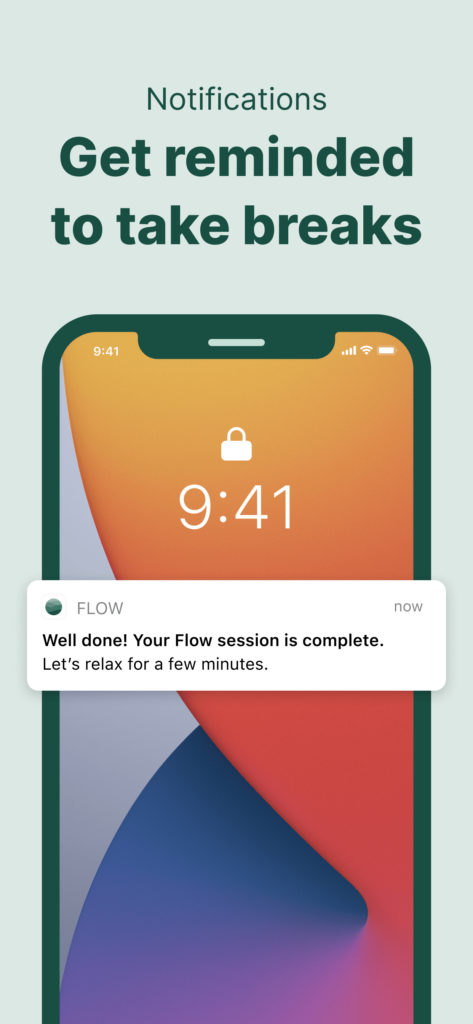
Flow is a focus timer for iPhone, iPad, Mac and Apple Watch built on the Pomodoro technique: you work in a fixed block, take a short break, and repeat. Its app blocker and web blocker shut out email and social media while the timer runs. A stack of 30 essays goes faster in four protected 25 minute rounds than in an evening of grading between notifications.
For teachers, the best use is guarding the hours you already reserve for grading and planning, not adding more of them. Plan a set number of rounds for a set of essays, and stop when the last one ends. Flow’s site says the basic features are free with no ads, no sign up and no credit card.
Flow only runs on Apple devices, so Windows and Chromebook users need a different timer, and no app will stop a colleague from knocking on your door during a free period.
Pricing: basic features free; Pro pricing not published on the website.
How much time a tool can give back
Vendors of time saving tools for teachers promise hours. A quick calculation tells you whether a tool can deliver them in your week. The figures below are illustrative for a secondary teacher with five classes; replace them with your own counts.
The one time setup, writing about 30 snippets and a comment bank, takes roughly three hours, so it pays back inside the first week. The comment bank is the line that moves the total most. If only half your feedback can reuse a stored comment, that line saves 60 minutes instead of 120, the weekly total drops to 182.5 minutes, and the year comes to about 114 hours. Even the lower figure would cut the ten unpaid hours a week RAND measured by about a third.
Money is the other input. The paid versions of MagicSchool ($99.96 a year), Diffit ($149.99), Classroomscreen ($36) and PlanbookEdu ($30) add up to $315.95 a year. For comparison, RAND’s 2026 State of the American Teacher survey found teachers spending a little more than $600 of their own money on school supplies. Pay for the one upgrade that removes your biggest weekly task, and ask your school to cover the rest.
Best pick by situation
- First year teacher: PlanbookEdu free for weekly plans and Diffit, which offers first year teachers free premium access. Planning is where new teachers lose the most time.
- English or humanities teacher with heavy marking: Text Blaze for a comment bank and Kami if you mark PDFs. Feedback is the biggest block in your week, and both cut the time per piece.
- Teacher with many multilingual families: TalkingPoints. Translation and text message delivery reach families that email and apps miss.
- Teacher who wants to start with AI: MagicSchool free. It covers the three tasks Gallup found teachers use AI for most, in one account.
- Teacher who feels busy but cannot say where the time goes: track a month of hours in actiTIME during its 30-day free trial before buying anything else.
- Private tutor or tutoring center: actiTIME, because the same hours you log become billable amounts and invoices for each family.
- Teacher who loses the evening to small tasks: Todoist for the list and Flow to protect the grading block.


Where productivity tools backfire
The tools above save time only when they replace work. These are the ways they end up adding it.
-
Too many logins.
Each new app is another password, another place work can hide and another thing to teach students. Keep the list to tools that remove a weekly task, and drop one before you add one.
-
Student data you were not allowed to share.
Pasting student names, grades or IEP details into a tool your district has not approved can break school policy and privacy law, such as FERPA in the US or the GDPR in the EU. Check your district’s approved list first, and keep identifying details out of AI prompts.
-
Unchecked AI output.
A generated answer key with one wrong answer costs more time in corrections and lost trust than it saved. Read every quiz and passage before students see it.
-
Free history that disappears.
Diffit’s free version keeps the last 90 days of content, and MagicSchool’s full history is a paid feature. Save anything you will reuse next year to your own Drive or folder.
-
Notifications that erase boundaries.
A parent messaging app on your phone means parents can reach you at 10 pm. Set office hours in the app and turn off notifications after school, as our guide to teacher work-life balance suggests.
-
Setup that never pays back.
A comment bank you build and then forget to use is pure cost. Give each new tool a four week trial, count the minutes it saves, and drop it if the number is small.
FAQ
What is the best free productivity tool for teachers?
Google Classroom, if your school uses Google Workspace for Education, because it is free for qualifying schools and removes the most routine work: collecting, tracking and returning assignments. If your school does not use it, MagicSchool’s free version is the best single free tool, since it covers lesson drafts, quizzes and parent emails in one account.
Is it safe to use AI tools with student information?
Only if your school or district has approved the tool, and even then keep identifying details out of prompts. Use first names or initials at most, never grades, health or special education details. Tools sold to districts, such as MagicSchool Enterprise, come with data privacy agreements, while free individual accounts depend on the vendor’s standard terms.
Should teachers track their working hours?
Yes, for a few weeks. Tracking hours by task for one month shows whether grading, planning, email or admin is taking the unpaid time, so you buy the tool that fixes the real problem. Tutors and tutoring centers that bill by the hour should track continuously, because those hours become invoices.
Conclusion
The productivity tools for teachers that pay off are the ones tied to a weekly task. Classroom ends the paper chase, MagicSchool and Diffit shorten planning, Text Blaze and Kami speed up feedback, TalkingPoints reaches families in their language, and Classroomscreen, PlanbookEdu, Todoist and Flow keep the rest of the week in order. Pick the one that matches your biggest time sink, use it every week for a month and measure what it gives back.
If you are not sure where the hours go, or you bill tutoring by the hour, start a free 30-day trial of actiTIME with full features. After the trial, teams of up to 3 users can keep using it for free.