



“Time tracking is time-consuming.” “I don’t want to micromanage my team.”
These are some of the most common reasons why teams and businesses restrain from implementing time tracking software. Time trackers have a reputation of a time-consuming administrative headache that chokes creativity and focus, which is neither true for managers and executives, nor applicable to teams. When implemented correctly, time tracking takes your team only a few minutes weekly to register working hours. In return, managers and executives get access to project and team management data, time and attendance management, while their teams become more organized and focused. This guide explains how time tracking supports team management and what to look for in a solution for different team setups, including hybrid, creative, technical and non-technical teams.
How Time Tracking Software Helps Teams Work Better
For teams, time tracking is primarily used to understand workload distribution and project effort over time. For managers, it replaces guesswork with data. For team members, it creates transparency and reduces friction.
-
Shared visibility into team workload
When everyone tracks time the same way, the team gets a realistic picture of where effort goes. This reduces “invisible work,” makes priorities clearer, and helps people understand how their work contributes to the bigger goal. -
Fairer work distribution
Without time data, managers often assign work based on who seems available or who responds fastest. Time tracking shows who is overloaded and who has capacity, so work can be distributed more evenly and burnout risk becomes easier to spot early. -
Fewer coordination problems
Teams miss deadlines not only because of poor execution, but because effort is misestimated and dependencies are underestimated. Tracking time by project or task helps detect when work starts taking longer than planned, so the team can adjust scope, timelines, or priorities while there’s still time. -
Accountability without micromanagement
Time tracking creates a consistent standard for reporting work. It reduces personal bias in status updates and makes it easier to discuss delivery issues based on facts rather than opinions. Done right, it supports team accountability instead of individual policing. -
More reliable planning over time
As the team builds historical data, planning becomes more realistic. Estimates improve, deadlines become more achievable, and managers can justify staffing decisions with evidence rather than assumptions—especially when the team runs multiple projects or client engagements.
Best Practices of Time Tracking for Team Management
Software market offers hundreds of time trackers for different industries and specific needs. Their interface and functionality may vary tremendously from basic time tracking tools to advanced accounting and absence management features. Let’s see how you and your team can make the most of your time tracking solution.
1. Communicate the Importance of Time Tracking
“My manager doesn’t trust me” “They want to micromanage me” “They are looking for reasons to fire me”
When your relations with employees lack transparency and trust, they tend to overthink, feel micromanaged and stressed. To avoid this scenario, you need to clearly communicate why managers need time tracking data and how employees benefit from it. For example, you use time tracking data to provide accurate bills and reports to your customers, evenly distribute the workload across the team, prevent overloads and watch out for burnout cases. Employee benefits may include a fair workload, accurate overtime payment, flexible schedules and the opportunity to work from home.
2. Implement Healthy Time Tracking Tools & Practices
Business time trackers usually offer several ways of how employees can capture their hours. Solutions that don’t support activity tracking and other workplace surveillance practices, usually include timesheets and timers available as desktop software, web applications, browser extensions and mobile apps. Make sure that your team time tracker doesn’t violate employee privacy, provides flexible tools and encourages trust.
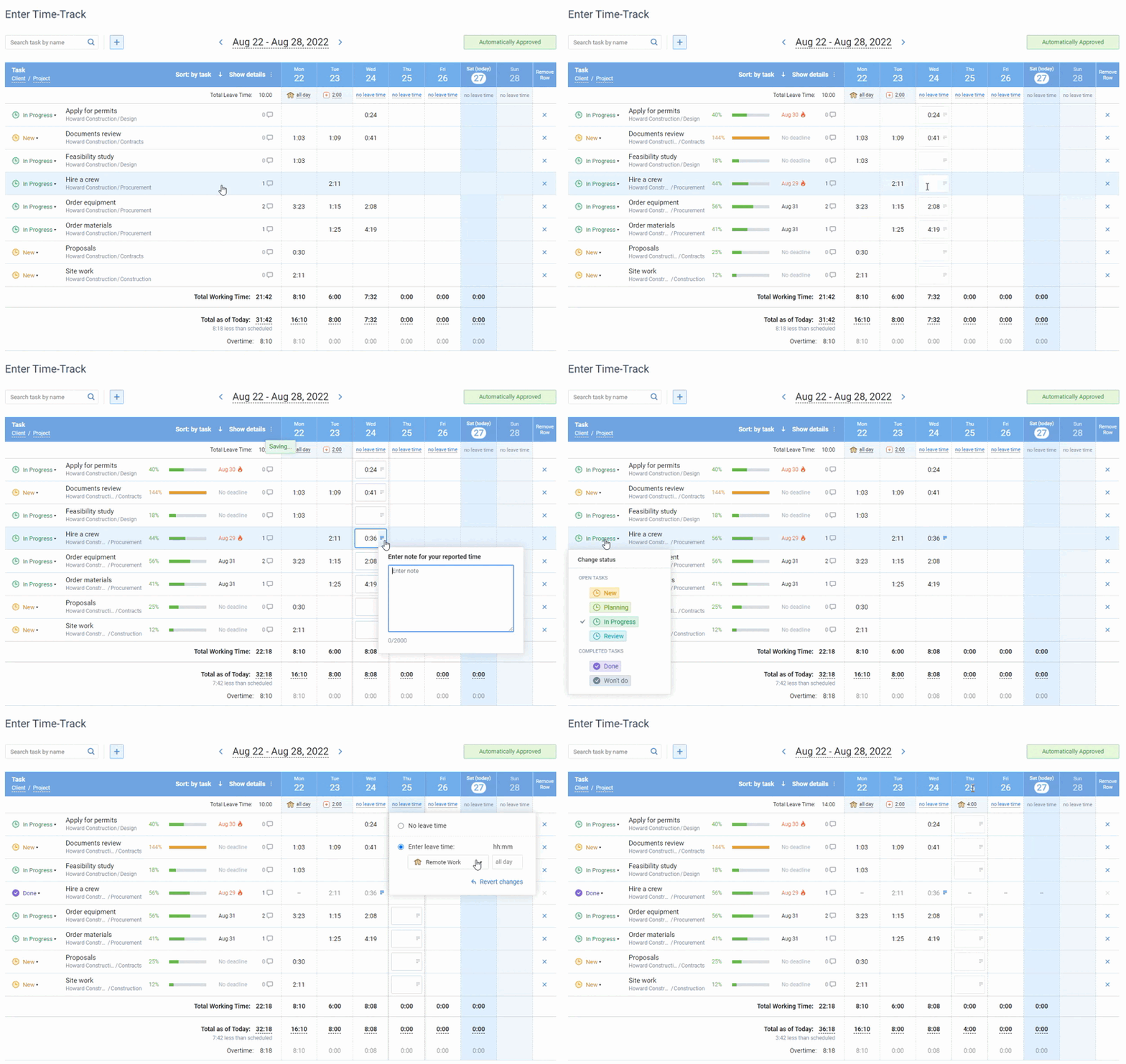
Online timesheet interface in actiTIME where every user can select task parameters they want to see in their timesheets
3. Develop Time Tracking Policy
To make time tracking data compelling and easy to process, you need to bring structure into task naming, commenting, billable and non-billable time tracking. Document necessary guidelines, explain why it has to be done this way, distribute this policy across your team and adopt the system as early as possible.
4. Capture Time Right Away
If your team has never used a time tracker before, employees may feel resistant to it, forget to log their time after they finish a task or even fill in their timesheets at the end of the week. Inaccurate time tracking costs companies thousands of dollars, with $50,000 per year due to insufficient tracking of emails alone (study by AffinityLive). Encourage your team to track their time on a daily basis and make it a habit just like checking emails. For even more accurate time logs, ask your team to start their timers in the time tracking app, browser extension or mobile app whenever they begin a new task and press “stop” when they finish to save their data.
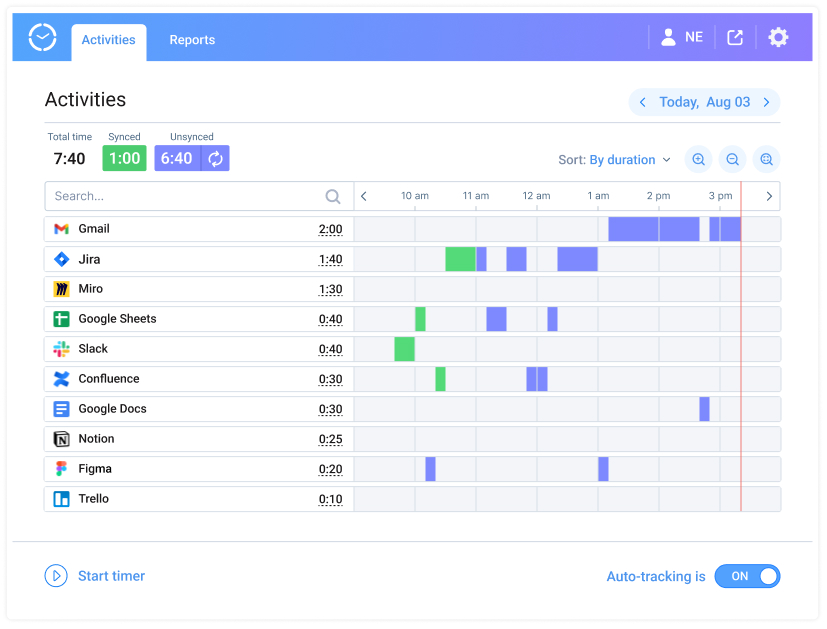
Forget about manual time tracking and get precise progress data with Time Management Assistant
5. Use Time Log Comments
Sometimes tracking time against tasks is not enough, especially in the case of outsourcing companies and consultancies. For example, legal professionals usually bill their clients in small increments of an hour, so their clients need to know the details of tasks such as “Communication” or “Research”. If you need this level of detail, look for time trackers that support time entry comments and encourage your team to use it. After your employees supplied their time logs with comments, they are displayed in time tracking and billing reports, so you as a manager and your clients can benefit from detailed insight into accomplished activities.
6. Monitor Project Progress
To make your project progress visual, consider time trackers that display tasks in the Kanban board view. After you determine project development stages, you review tasks’ progress according to their status on the board. This visual presentation of task stages can motivate your team members to finish their tasks and move them to the final stage, while you as a project manager can use this board to keep track of project progress, identify bottlenecks and eliminate them as early as possible.
7. Estimate Tasks
Accurate task estimates are critical for project success. For example, underestimated tasks can stall the project’s progress due to the lack of resources including time, money and manpower. That’s why it’s important to keep a record of previous data to make better predictions for future projects. If you manage your team according to the Scrum methodology, consider holding a task estimation meeting before you start a new Sprint. Add these estimations to your time tracking software to pull reports and compare estimated time against the actual time and plan next sprints with more accuracy.
8. Review Team Performance
Employee performance evaluation is an important management practice that provides project managers with insights about employee’s strengths and weaknesses in the workplace, and give employees valuable feedback and identify points of growth. In time tracking systems, you can review employee performance through different charts and reports. These usually include reports comparing estimated time against actual time, reports on how working hours are distributed across tasks and projects, and analytics on whether task deadlines have been met
9. Hold Regular Reviews & Meetings
After you gathered productivity insights from charts and reports, you may hold a feedback meeting at the end of the month, Sprint or project. As a project manager, you can give your team feedback on their performance and highlight opportunities for growth. Another type of meeting that adds value to your time tracking routine is task estimation meetings. If you manage an Agile team, you should plan and estimate your next sprint and add this data to your time tracking system.
Time Tracking Software for Different Team Setups
Teams use time tracking for different reasons depending on how they work. Before comparing tools, it’s important to understand what matters most for each team setup.
Time Tracking Software for Creative Teams
Creative teams usually work across multiple clients, campaigns, or internal initiatives. Time tracking is primarily used to understand effort by project, control budgets, and improve future estimates. Tools for creative teams should support flexible task structures and client-level reporting without adding friction to daily work. What to pay attention to:
- Time tracking by client, project, and activity
- Support for budget and cost control
- Reporting that helps with estimation and profitability analysis
Time Tracking Software for Hybrid Teams
Hybrid teams combine remote and in-office work. Time tracking is used to maintain consistent reporting across locations and to understand workload distribution without relying on physical presence. What to pay attention to:
- Consistent time entry rules across locations
- Visibility into team workload and project effort
- Support for flexible schedules
Time Tracking Software for Non-Technical Teams
Non-technical teams such as marketing, HR, operations, and support need time tracking that is easy to adopt and easy to explain. The focus is usually on workload visibility and reporting rather than technical integrations. What to pay attention to:
- Simple and clear time entry
- Reports that are easy to interpret
- Minimal setup and maintenance
Time Tracking Software for Technical Teams
Technical teams typically track time to understand effort by task or project, support planning, and improve estimation accuracy. Tools should align with structured workflows and avoid unnecessary manual steps. What to pay attention to:
- Task- or project-level tracking
- Support for estimates and planning
- Alignment with structured development workflows
How to Choose Time Tracking Software for Your Team
If you’re choosing between tools, start by defining what the team needs time tracking for. Teams usually fall into one of these patterns:
- Project delivery: you need time by project/task to plan work and track progress.
- Budget control: you need to compare planned vs. actual effort and control cost impact.
- Client services: you need client-level reporting and clean time records for billing.
- Workforce oversight: you need attendance-style tracking for distributed teams.
Once that’s clear, check two practical points before implementation:
- Adoption: whether the team can log time consistently with minimal friction.
- Reporting: whether managers can answer workload and project questions without manual workarounds.
If your priority is team-level visibility across projects with structured reporting, actiTIME is built for that workflow. It offers a free 30-day trial (no credit card required) or book a product tour with our experts. If your priority is agency operations, workforce oversight, or a Jira-native approach, you’ll likely lean toward the specialized options listed in the tables above.